
ATEX Filters and Dust Collection Systems
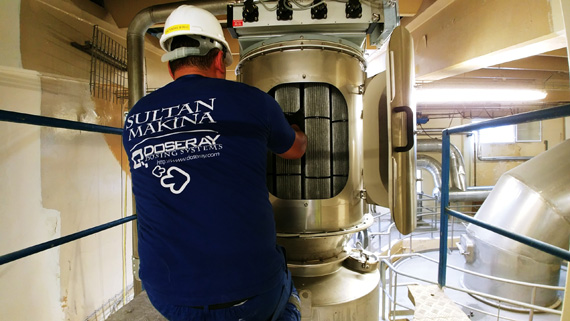
ATEX filters manufactured by Sultan Makina Ltd. Şti. under the DOSERAY brand separate dust from the air in Ex areas where combustible and explosive dusts are handled. Our Ex-proof pulse-jet filters used on silos, hoppers, mixers and cyclones, and the plant-wide ATEX dust collection systems we install, are designed specifically for your process in compliance with ATEX Equipment Directive 2014/34/EU.
How Are Silo and Hopper ATEX Filters Used?
Micronised raw materials (bulk solids) conveyed pneumatically or mechanically inevitably generate dust once they enter the process. Airborne dust is separated by a filter, making the working environment safer and more comfortable.
This applies to ordinary dusts. However, when dusts that pose a fire and explosion risk (most organic dusts, carbon black, sulphur, plastic and metal dusts) enter the process, the area becomes an Ex area and all the rules and critical conditions change. In these environments, the European Union's ATEX Equipment Directive 2014/34/EU must be followed to protect against explosion risks. Although practice varies slightly from country to country, the general rule is the same.
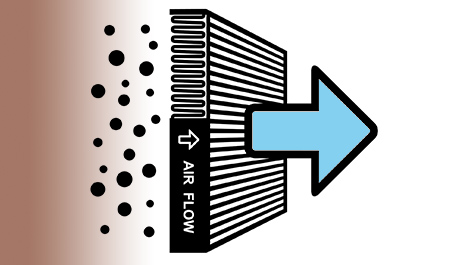
Dust separators, also known as ATEX filters, must be used to separate organic or explosive dusts from the air. This way the product remains safely in the silo or enclosed volume while the cleaned air is discharged from the filter.
Depending on the requirements of the process, the particle size of the conveyed material and whether it operates under vacuum or pressure, ATEX filters keep airborne dust within limits that are not harmful to human health, using packaged dust collection units, pulse-jet ATEX filters or cyclone solutions.
ATEX Dust Collection Systems
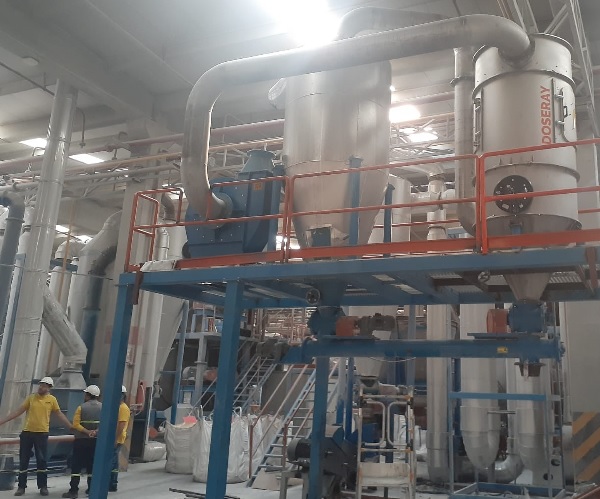
An ATEX dust collection system is an Ex-proof system that extracts dust from the points where combustible dusts are released and collects it safely. Rather than a single filter, it requires the entire line, from the dust source to the atmosphere, to be designed for an explosive atmosphere. A typical ATEX dust collection system consists of the following sections:
- Extraction points (hoods): Capture dust at source at bag tipping, mixer, filling and transfer points.
- Dust extraction ducts: Dust is conveyed at a velocity that prevents it from settling in the duct; depending on the type of dust, this velocity is typically selected in the 18-25 m/s range. Ducts are made of conductive material and earthed.
- Cyclone (pre-separator): Separates coarse and abrasive dust before it reaches the filter, extending the life of the filter elements.
- ATEX pulse-jet filter: Captures fine dust; fitted with antistatic elements and solenoid valves rated for the Ex classification.
- Fan: Usually installed on the clean-air side of the filter; selected with an ATEX rating suited to its zone.
- Dust discharge: The collected dust is returned to the process via a certified flameproof rotary valve or discharged into big bags and drums.
- Explosion protection: Where necessary, explosion vents and isolation valves prevent an explosion in the filter from spreading to other equipment.
Central and point-of-use dust collection
In central dust collection systems, many extraction points are connected to one large filter via a single duct network. In point-of-use (local) dust collection solutions, each piece of equipment, such as a silo, hopper or mixer, has its own small ATEX filter. Point-of-use systems shorten the duct network, return the collected dust directly to the process and reduce the likelihood of explosion risk being carried to other equipment. The right solution is determined by the type of dust, the number of extraction points and the plant layout.
ATEX Filter Elements and Emission Values

For pulse-jet ATEX filter manufacturing, we work with our European solution partners as well as domestic filter media producers and companies specialising in ATEX filter elements, and we build pulse-jet cleaning systems of our own design.
- Depending on the process, filter elements are made from PTFE (Teflon®) coated, antistatic, water-repellent and FDA-approved material, as bags, panels or cartridges.
- The most suitable system for your plant is selected with special ATEX filter media resistant to heat, moisture and fire.
- Dust emissions with the filter media we use are below 1 mg/Nm³.
- The filter media is class M according to DIN EN 60335-2-69 and achieves efficiencies of up to 99.9% for dust in the 0.2-2 micron range.
Under the Turkish Regulation on the Control of Industrial Air Pollution, published in Official Gazette No. 27277 of 3/7/2009, dust emissions in flue gas must not exceed 100 mg/Nm³. The emission value of our ATEX filters is far below this limit.
Cyclones and Pulse-Jet Filters
In pneumatic systems, a conical body that separates air from dust by centrifugal force is called a cyclone. The air and dust mixture enters the cyclone tangentially and spins inside the body, forming a vortex. Dust and granules thrown against the outer wall by centrifugal force fall by gravity down the conical section, while the cleaned air rises through the central outlet pipe to the filter or atmosphere.
Cyclone inlets can be square, rectangular, round or tangential; the choice depends on the process. By capturing coarse dust ahead of the filter, the cyclone reduces the load on the filter elements. For details, see our cyclone page.
Our product-specific filter solutions
Dust Collection Specifications
| Operating temperature | Up to 80-150 °C depending on the filter element |
|---|---|
| Particle retention | 1-5 micron |
| Element design | Small diameter, pleated, antistatic |
| Surface treatments | Surface glazing, calendering, Teflon impregnation, PTFE coating, special resin coating |
| Housing diameter | 400-3000 mm |
| Filter area | Calculated according to air flow rate |
Silo, Hopper and Process ATEX Filter Applications
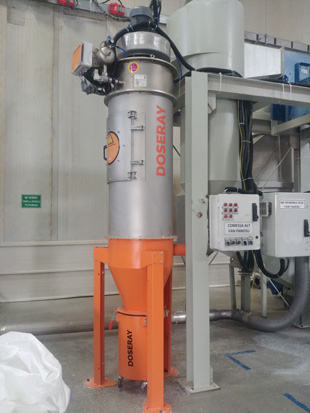
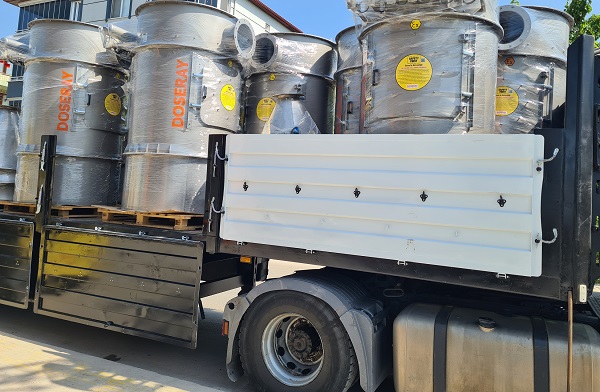
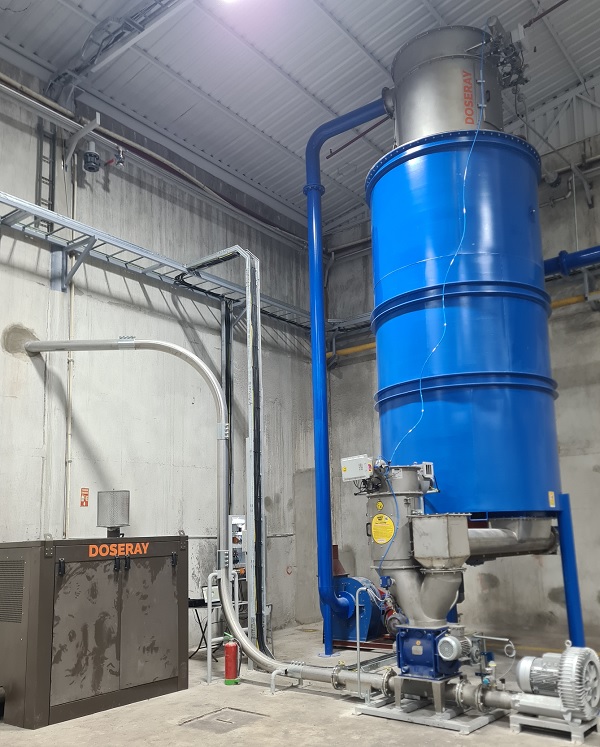
Although ATEX filters are mostly associated with silos, they are used at many points in the process, such as silo and hopper tops, cyclone tops, mixers, reactor feeding and extruder extraction. The first image below shows an ATEX filter application on a reactor-top cyclone feeding system.
The dust collection filter alongside was built to prevent dust released in the process from harming workers. Our ATEX filters are designed to suit the needs of the process, in diameters of 400-3000 mm and in various versions, with the filter area calculated according to the air flow rate.
Frequently Asked Questions
What is an ATEX filter?
An ATEX filter is a dust collection filter used in Ex areas where combustible or explosive dusts are handled, manufactured in compliance with ATEX Equipment Directive 2014/34/EU. It separates dust from the air so that the product remains in the silo or enclosed volume while the cleaned air is discharged.
The purpose of these filters is not only to capture dust but also to prevent the filter itself from becoming an ignition source. That is why the housing, filter elements and electrical equipment are selected for the explosive atmosphere.
What is an ATEX dust collection system?
An ATEX dust collection system extracts dust from the points where combustible dusts are released and collects it safely against the risk of explosion. It consists of extraction points, earthed extraction ducts, a cyclone, an ATEX pulse-jet filter, an ATEX-rated fan and a dust discharge rotary valve.
The system is designed not as a single piece of equipment but as a whole, from the dust source to the atmosphere. Where necessary, explosion vents and isolation valves prevent an explosion from spreading through the ducts to other equipment. It can be installed as a central system (one large filter) or as point-of-use units (a separate filter on each piece of equipment).
What is the difference between a standard filter and an ATEX filter?
Although they look similar from the outside, an ATEX filter includes additional measures against static electricity and spark risk:
- The filter elements are antistatic; the housing, cage and elements are bonded to one another and to earth (earthing).
- Electrical equipment such as the solenoid valves of the pulse-jet system, the timer and the fan motor is selected with a rating suited to the Ex zone in which it is installed.
- Where necessary, the filter is designed with an explosion vent that directs the explosion pressure in a safe direction or an isolation valve that prevents the flame from spreading along the line.
Which dusts require an ATEX filter?
Organic dusts such as flour, sugar, starch, maltodextrin and milk powder, as well as carbon black, sulphur, plastic dusts (e.g. PVC) and metal dusts such as aluminium, pose a fire and explosion risk. Areas where these dusts are handled are classified as Ex areas and require ATEX-compliant filters.
A dust explosion requires combustible dust, oxygen, an ignition source, a dispersed dust cloud and an enclosed volume to be present together. The interior of a filter is a place where all of these conditions can occur. For correct design, the explosion characteristics of the dust (such as the Kst value and minimum ignition energy) must be known.
What do Ex zones (Zone 20, 21, 22) mean?
Dust atmospheres are divided into three zones according to how often an explosive dust cloud occurs:
- Zone 20: An explosive dust cloud is present continuously or for long periods (e.g. inside silos and filters).
- Zone 21: Likely to occur occasionally in normal operation (e.g. around filling and discharge points).
- Zone 22: Not expected in normal operation; if it occurs, it persists only briefly.
Zone classification is carried out by the plant operator (Directive 1999/92/EC; in Türkiye, the Regulation on the Protection of Workers from the Hazards of Explosive Atmospheres). Filters and equipment are selected according to this classification.
How does pulse-jet cleaning work?
Over time, a layer of dust builds up on the outer surface of the filter elements. Solenoid valves connected to a compressed air tank send short, powerful reverse air pulses into the elements at set intervals under timer control. The element flexes, the dust layer on the surface drops off and returns directly to the silo, hopper or process.
Cleaning can be time-controlled or based on the filter differential pressure. This allows the filter to run efficiently for long periods without clogging and without product loss. For details, see our filter timer units page.
What material are ATEX filter elements made of?
Depending on the process, bag, cartridge or panel elements made from PTFE (Teflon®) coated, antistatic, water-repellent and FDA-approved material are used. The elements are manufactured to operate at temperatures up to 80-150 °C and to capture particles of 1-5 microns.
- Thanks to their pleated structure, cartridge elements provide a large filter area in a small volume; they are often used in silo-top filters.
- Bag elements are suitable for applications with high dust loads.
- PTFE-coated elements are easy to clean with sticky and moisture-sensitive dusts; FDA-approved media are preferred in food applications.
What are the dust emissions of ATEX filters?
Dust emissions with the filter media we use are below 1 mg/Nm³. The filter media is class M according to DIN EN 60335-2-69 and achieves efficiencies of up to 99.9% for dust in the 0.2-2 micron range.
This value is far below the flue gas dust emission limit of 100 mg/Nm³ set by the Regulation on the Control of Industrial Air Pollution. To keep emissions low, the filter area must be calculated correctly for the air flow rate and the elements must be cleaned regularly.
Where are ATEX filters used?
They are used on silo and hopper tops, on cyclone tops, on mixers (e.g. PVC mixers), in reactor feeding, in extruder extraction systems, at big bag and bag tipping stations, and at any point in the process where dust is released.
The main industries are food (flour, sugar, starch), chemicals, plastics, rubber (carbon black) and pharmaceuticals. They are designed in diameters of 400-3000 mm according to the needs of the process.
 Filter and Dust Collection Systems Catalogue