
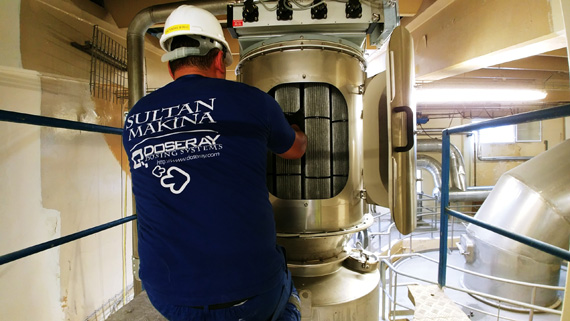
Calcite silo filter applications (micronised calcite filter)
Calcite ground to 1–100 microns is commercially known as micronised calcite and is generally used in the filler and coatings industries. Filters are equipment that separate air from product in enclosed volumes such as silos and hoppers where bulk solids are stored, above all in food, chemical and industrial plants. Examples include silos and hoppers storing industrial raw materials such as cement, PVC, calcite, lime, polymers, PVC additives, petcoke and carbon black. Stainless steel versions, built according to the process type, are widely used in food plants, especially on sugar and flour silos. Filter efficiency depends on the air permeability and dust retention capability of the filter media. We source the filter media used in our products from world-leading companies in this field. You can find information on filter permeability and dust retention performance in the attached PDF documents.
Filter Media Data Sheet (JX260) (PDF)Filter Media Test Report (JX260) (PDF) Filter media reportFilter Media Test Report (JX260) (PDF) Filter Media Data Sheet (JX260) (PDF)Filter Media Data Sheet (JX260) (PDF) Filter media data sheet Filters and Dust Collection Systems Catalogue (PDF)Filters and Dust Collection Systems Catalogue (PDF) General filter catalogue
Filter production range: general characteristics and technical specifications
AISI 304 stainless or RAL 2003, 1–48 m², Ø1,000 mm suction / positive-pressure filter
Antistatic, cylindrical filter cartridges
Access covers on both sides of the housing so the operator can easily remove and refit the filter elements
Easily removable filter media for fast maintenance (twist-and-pull)
Flanged, rigid construction for easy installation
Safety grid to prevent filters from falling into the silo or hopper
Smart, programmable jet cleaning module
Adjustable electronic timer: option to start via external contact; after-run cleaning of the filter for a set time once the contact opens
Supply voltage: 220 V AC – 24 V DC – 24 V AC (with external SMPS supply)
Selectable 4–8 relay or triac outputs; can operate DC and AC (24 V) pulse valves simultaneously
Flexible output module with different combinations and interchangeable options across 8 outputs
5 solenoid valve groups (SMC, Japan)
Maximum air flow temperature: −40 / +80 °C (continuous), +100 °C (peak)
Pulse-jet operating pressure: 5 bar
* Provision and flange for filter fan connection; design air flow: 1,500–5,500 m³/h
* Safety grid to prevent the filter media from falling (on silo filters the standard connection is a weld-on flange; optional on hopper filters)
* Fan power: 0.75–5.5 kW
Technical note: Because filters are open to atmosphere, the pressure and vacuum in a silo, hopper or enclosed volume are low, so filters are not rated by the vacuum/pressure of the process. Even if the conveying pressure is 1.5 bar, the pressure in the silo, hopper or enclosed volume remains at mbar level.
Pressure and vacuum values: positive 750 mmH2O (0.075 bar – 7.5 kPa), vacuum −500 mmH2O (−0.05 bar – 6 kPa)
Filter media and properties:
Under Article 1 of the Regulation on the Control of Industrial Air Pollution published in Official Gazette No. 27277 of 2009, dust emissions in flue gas must not exceed 100 mg/Nm³. The filter media we use achieve dust emissions of <1 mg/Nm³. The filter media are class M according to DIN EN 60335-2-69 and offer filtration efficiency of up to 99.9% for dust between 0.2 and 2 µm.
Special process filters and their use
These products are built to operate at temperatures of up to 150–250 °C and to capture particles of 0.1–5 microns; thanks to closely pleated cartridge or bag surfaces, they offer a large dust collection area. Depending on the process, the following treatments can be applied: 1) surface singeing, 2) calendering, 3) Teflon impregnation, 4) PTFE coating and 5) special resin coating.
Silo filters and filter processes
Since all raw materials conveyed pneumatically or mechanically are in powder or granular form, dust is inevitably generated once they enter the process. To prevent this and to separate the material from the air again, dust collectors, otherwise known as filters, must be used.
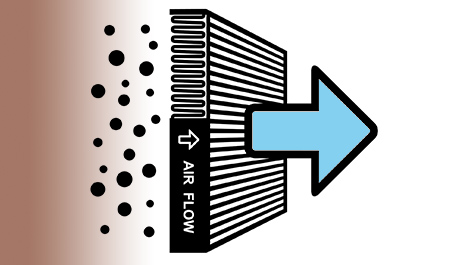
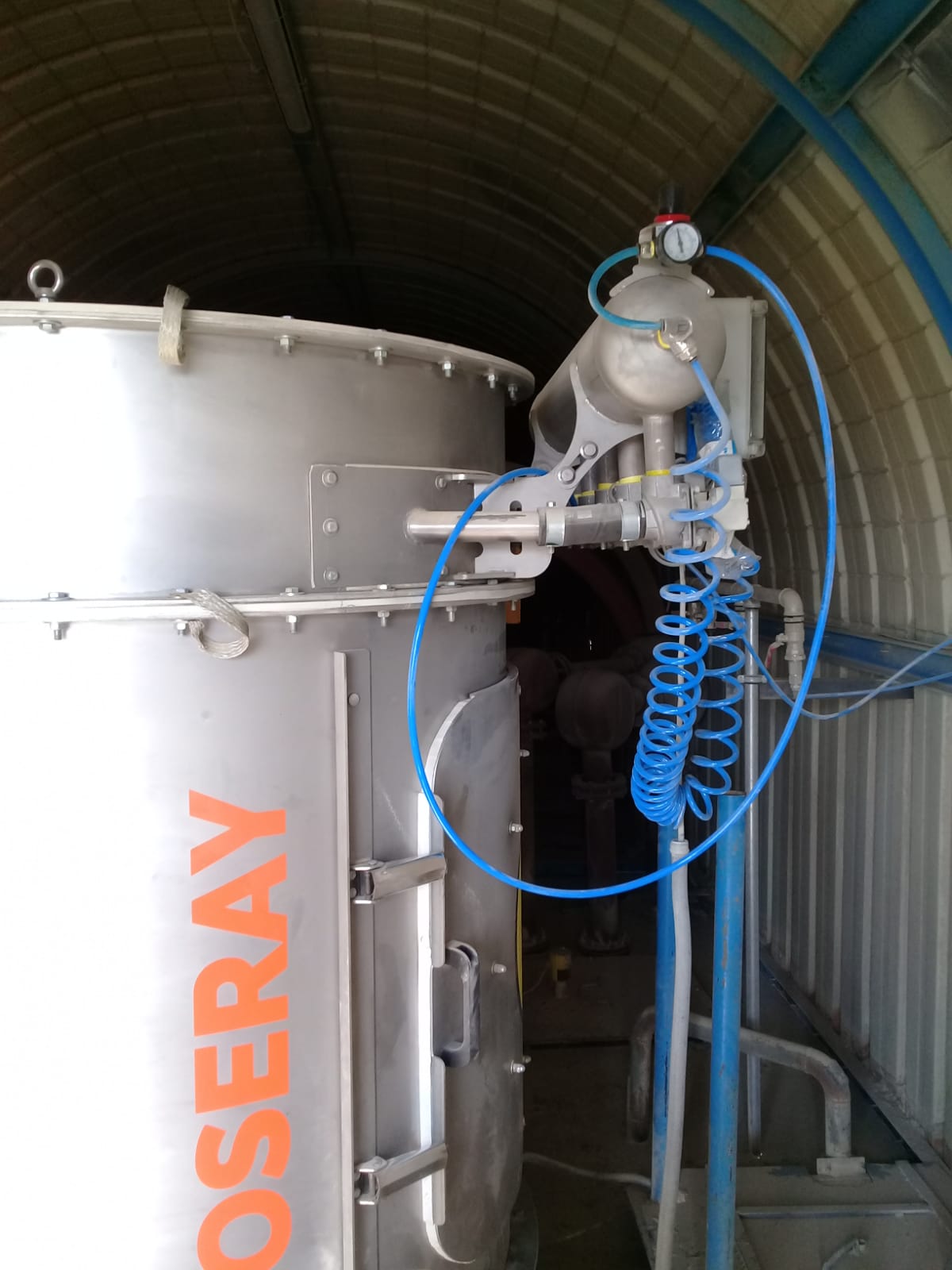
Whatever your process, wherever there is mechanical movement, dust is generated depending on the particle size of the raw material you use. Whether this dust is raw material or finished product, it must not remain suspended in the atmosphere. Every place where powdered products are handled therefore needs a filter. In large plants this is handled centrally, but individual filters should be used at points that cannot be connected to the central system, or where waste dusts must not be mixed for recycling. These are also known simply as hopper filters.Applications of hopper and process filters
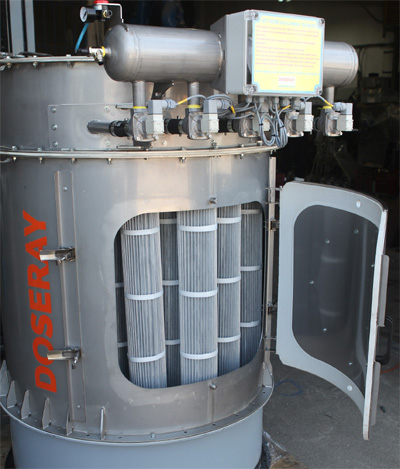
Applications of silo and process filters
- PVC processes, powder storage silos
- Hot and cold PVC mixers
 Filter and Dust Collection Systems Catalogue