Carbon black conveying and dosing
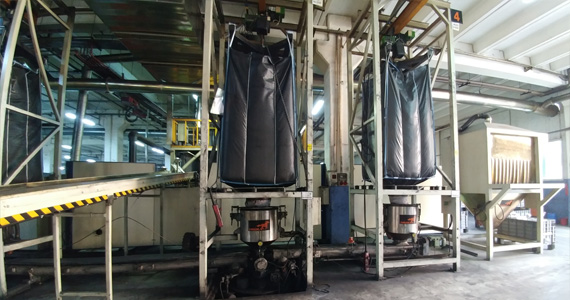
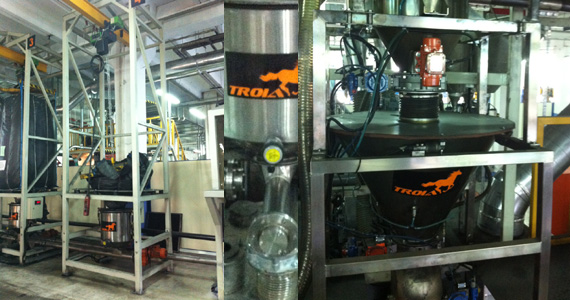
Carbon black, one of the most important raw materials in rubber production, is a primary input to this batch process. Available in different grades, carbon black enters production according to a recipe based on its specification before being fed to the Banbury mixer. It usually arrives in big bags and is introduced into the process through a closed system. The dosing, conveying and filtration systems along the route from big bag to Banbury mixer are among our company's core areas of activity. Liquids are among the other dosed inputs of the process. Carbon black can be conveyed mechanically or pneumatically; however, with either method, points that require experience and know-how must be taken into account. Otherwise the process may run into trouble because of the product's stickiness and flow properties.
Carbon black is mainly used in the manufacture of vehicle tyres (inner tubes and outer tyres), cables, conveyor belts and hoses. It is also used as a pigment in rubber and other industries. In the rubber industry it is used as an additive and filler in car tyres, machine parts, cables, conveyor belts, masterbatch, hoses, heels and soles, and as a pigment to impart black colour. In all these operations, carbon black enters the process in specific quantities and ratios depending on the job. During mechanical movement, conveying and semi-finished processing, the prepared mixture inevitably spreads into the environment as visible and invisible dust. Filtration systems must always be used during operation to minimise the impact on the environment and avoid harming neighbouring facilities.
Carbon black filtration system
Low-permeability filters for carbon black processes are foremost among the special filters we manufacture. Carbon black is a dust that spreads very quickly and stays in suspension; it resembles chimney smoke and soot and contains 97% carbon. It must be contained in closed systems using high-flow fans and dust collection filters.
In another application, the exhaust gases of all filters in carbon black dust collection systems are connected to a further filter system and released to atmosphere after a second cleaning stage.
Effects on human health
At a workplace airborne dust concentration of 1.0 mg/m³, long-term exposure to carbon black (over a working life of more than 40 years) may cause a clinically insignificant decrease in lung function measured as FEV1. The International Agency for Research on Cancer (IARC) has classified carbon black as possibly carcinogenic to humans (Group 2B). Carbon black is not listed as a carcinogen by the US National Toxicology Program (NTP), the American Conference of Governmental Industrial Hygienists (ACGIH), the US Occupational Safety and Health Administration (OSHA) or the European Union countries.
Mechanical and pneumatic solutions
Flexibility is the most sought-after feature when designing pneumatic conveying systems. When standard products are used, maintenance, modifications and wear-related replacements can be carried out very quickly. Ease of installation is another reason to choose them.
Carbon black
process filters
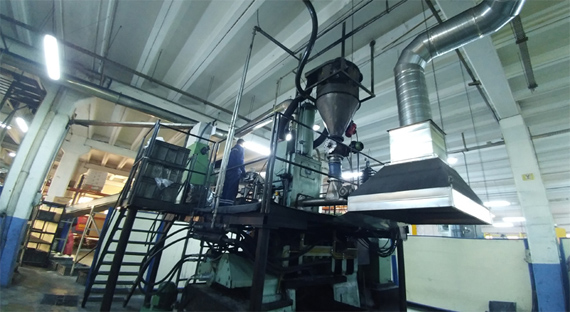
Because carbon black is a micronised product, its most notable characteristic is that it stays suspended and spreads through the environment. Areas where carbon black is handled must therefore be kept under slight vacuum, and work should be carried out in isolated zones wherever possible.
READ MORE Filter and Dust Collection Systems Catalogue