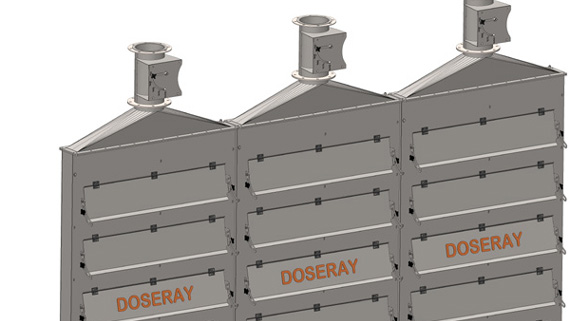

What Is an Intake Pit Filter?
An intake pit dust filter system (also known in the industry as a tipping pit filter or reception pit filter) is a dedicated filtration arrangement developed to control the heavy dust and particles generated in industrial plants when bulk raw materials are unloaded from railcars, trucks or various earth-moving machines.
These systems are generally mounted on the walls or directly on the edges of the intake pits in all plants where bulk materials are handled, above all in food (pulses, grain, etc.), feed, cement, ceramics and mining.
How an Intake Pit Filter Works
Material transfer and dust generation: Bulk materials tipped into the intake pit by truck or loader release a dense cloud of dust into the surroundings.
Aspiration (air extraction): High-performance centrifugal extraction fans draw the air and airborne dust around the pit through the filter bags.
Particle capture: Dust particles carried by the extraction air are retained on the outer surface of the filter bags, while the cleaned air is discharged to atmosphere by the fan.
Pulse-jet (automatic cleaning): A compressed air tank and PLC-controlled pulse valves apply reverse compressed-air pulses to the filter bags at set intervals. This shakes the bags and removes the accumulated dust layer.
Product recovery: Dust released from the bags falls directly into the screw conveyor below or into the intake pit and rejoins the main product, preventing raw material losses. Using a cyclone in the dust extraction line also increases filter efficiency.

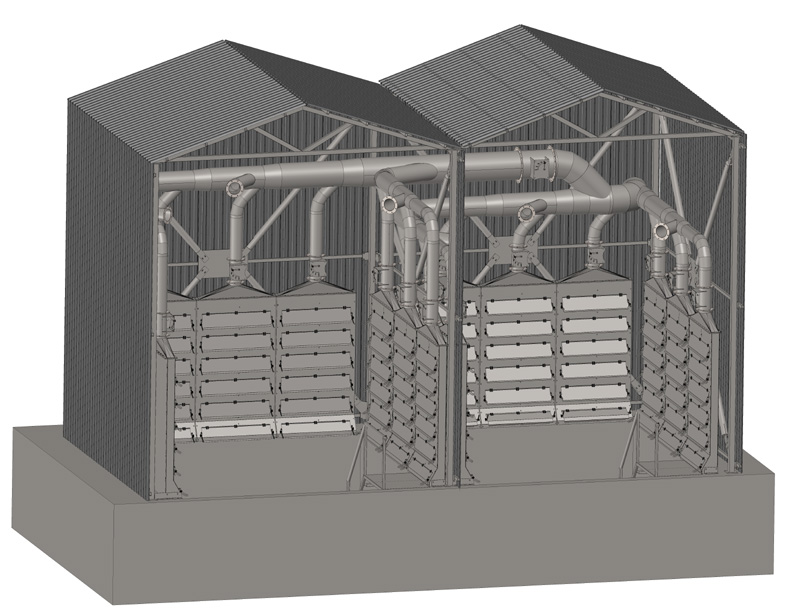
Key Benefits of Intake Pit Filters
- Occupational safety and environmental protection: Protects the respiratory health of personnel working in the unloading area and limits harmful emissions to atmosphere.
- Prevention of raw material losses: Captures dust that would otherwise be lost to the air and returns it to production.
- Continuous, automatic cleaning: Pulse-jet technology keeps the filter elements from clogging, so they run for long periods at high efficiency.
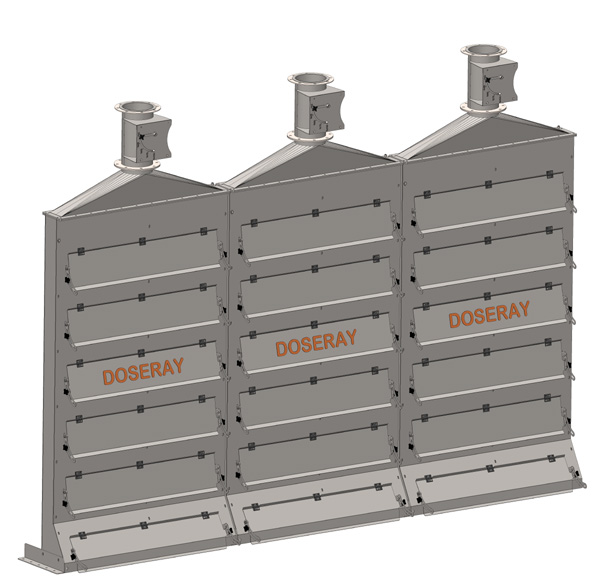
- Flexible, modular design: Available in modular or wall-mounted versions that can be adapted to the plant's throughput and the dimensions of the pit.
Cyclone and Manifold Ductwork Upstream of the Intake Pit Filter
In industrial dust collection and pneumatic conveying systems, cyclone and manifold design is among the most critical engineering factors, directly affecting overall system efficiency, filter bag life and pressure losses.
Cyclone design and importance: Installed upstream of the main filter unit (bag or cartridge filter), cyclones capture coarse and abrasive particles in the raw gas stream by centrifugal (cyclonic) force.
Pre-separation efficiency: Greatly reduces the load on the fine filter bags by preventing the material from going straight to the bags.
Manifold design: In air extraction and dust collection systems, the design of the manifold (main collecting duct / header) directly determines the total pressure loss of the system, its energy efficiency and balanced suction along the line. A poorly designed manifold leads to weak suction at remote points and material build-up inside the duct.
READ MORE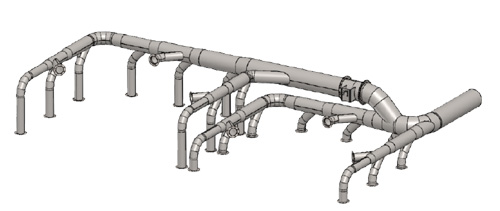
 Intake Pit Filter Catalogue