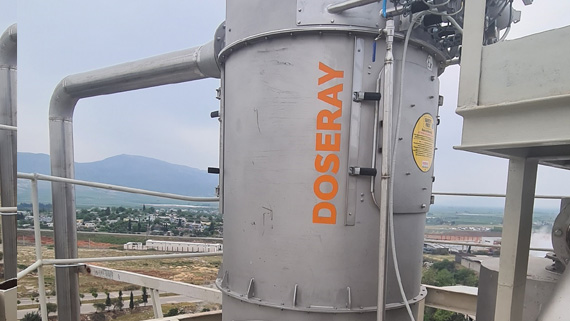

Sulphur silo filter applications (micronised sulphur filter)
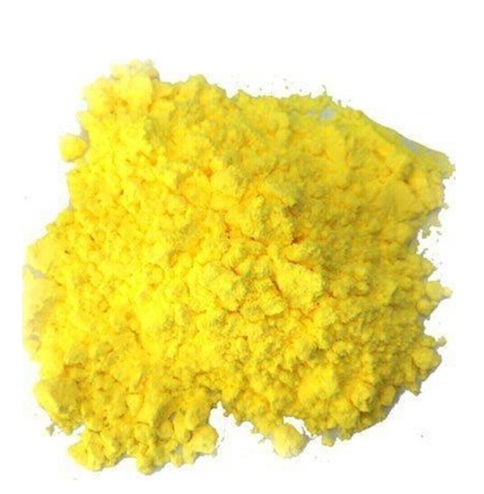
Sulphur ground to 1–100 microns is commercially known as micronised sulphur. Because it is both a combustible dust (elemental sulphur) and releases hazardous and explosive gases (sulphur dioxide, hydrogen sulphide) when processed, sulphur is a critical substance that must be strictly controlled and risk-assessed under the ATEX directives in industrial plants. When solid sulphur is conveyed mechanically or pneumatically by conveyors, silos or bulk tankers, the greatest risks are excessive dust, static electricity and the resulting explosion (ATEX) risk. All components, including the filter, must therefore be selected in compliance with the ATEX directives. 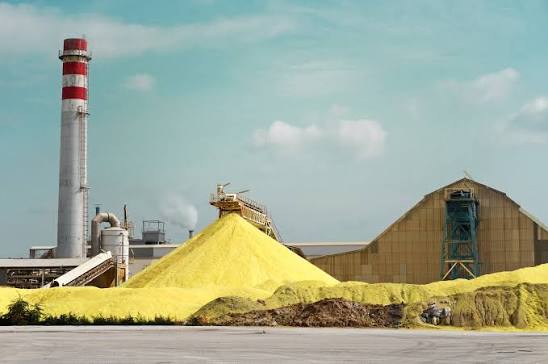
Dust explosion risk (elemental sulphur dust)
When fine sulphur particles and dust are suspended in air, they form an explosive atmosphere. The minimum ignition energy (MIE) of sulphur dust is very low; even a small static spark can trigger a major dust explosion.
• ATEX dust zones: Areas where sulphur is stored, conveyed (conveyors, crushers) or packed are classified as Zone 20, Zone 21 or Zone 22.
Filter Media Data Sheet (JX260) (PDF)Filter Media Test Report (JX260) (PDF) Filter media reportFilter Media Test Report (JX260) (PDF) Filter Media Data Sheet (JX260) (PDF)Filter Media Data Sheet (JX260) (PDF) Filter media data sheet Filters and Dust Collection Systems Catalogue (PDF)Filters and Dust Collection Systems Catalogue (PDF) General filter catalogue
Filter production range: general characteristics and technical specifications
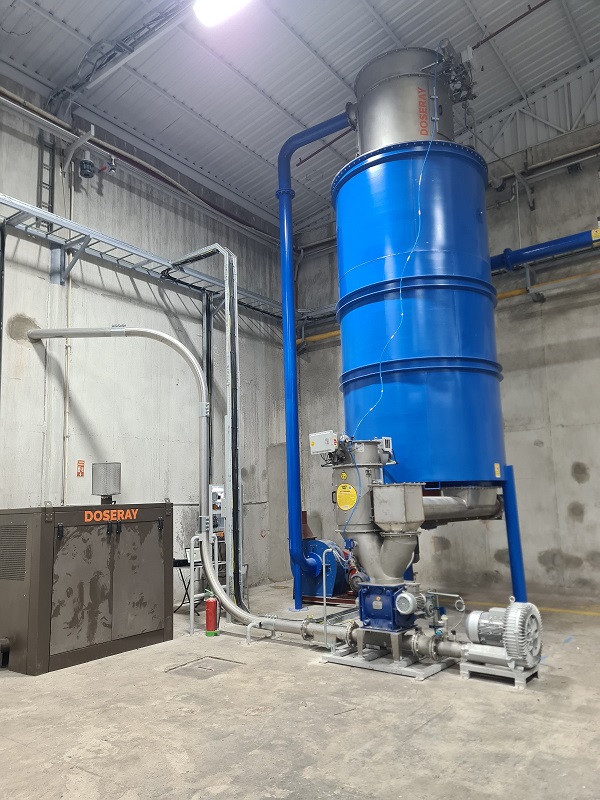
ATEX-compliant AISI 304 stainless, 1–96 m², Ø400–Ø1,400 mm suction / positive-pressure filter
Antistatic, cylindrical filter cartridges
Access covers on both sides of the housing so the operator can easily remove and refit the filter elements
Easily removable filter media for fast maintenance (twist-and-pull)
Flanged, rigid construction for easy installation
Safety grid to prevent filters from falling into the silo or hopper
Smart, programmable jet cleaning module
Adjustable electronic timer: option to start via external contact; after-run cleaning of the filter for a set time once the contact opens
Supply voltage: 220 V AC – 24 V DC – 24 V AC (with external SMPS supply)
Selectable 4–8 relay or triac outputs; can operate DC and AC (24 V) pulse valves simultaneously
Flexible output module with different combinations and interchangeable options across 8 outputs
5 solenoid valve groups (SMC, Japan)
Maximum air flow temperature: −40 / +80 °C (continuous), +100 °C (peak)
Pulse-jet operating pressure: 5 bar
Filter media and properties:
Under Article 1 of the Regulation on the Control of Industrial Air Pollution published in Official Gazette No. 27277 of 2009, dust emissions in flue gas must not exceed 100 mg/Nm³. The filter media we use achieve dust emissions of <1 mg/Nm³. The filter media are class M according to DIN EN 60335-2-69 and offer filtration efficiency of up to 99.9% for dust between 0.2 and 2 µm. In the newer standard, this has been replaced by ISO 16890.
ISO 16890 is an international standard developed for testing and classifying air filters used in general ventilation systems. Replacing the former EN 779 standard, this global standard assesses the particle retention performance of filters with a more realistic, human-health-focused approach. Classification by particle size: it examines filter efficiency across the particulate matter (PM) size ranges between 0.3 µm and 10 µm, which are the most critical for human health. PM efficiency groups: it divides filters into four main groups according to performance, ISO ePM1, ISO ePM2.5, ISO ePM10 and ISO Coarse. Electrostatic conditioning: it determines minimum efficiency values by applying test procedures with isopropanol (IPA) vapour to simulate the weakening of filters' electrostatic charging mechanisms over time. While EN 779 measured only a fixed particle size of 0.4 µm, ISO 16890 evaluates a wide range between 0.3 µm and 10 µm.
Sulphur and minimum ignition energy
What is MIE (Minimum Ignition Energy)?
MIE is the lowest electrical/static spark energy required to ignite (explode) a combustible dust cloud or gas mixture suspended in air, expressed in millijoules (mJ).
• The lower a substance's MIE, the more sensitive it is to explosion.
• Substances with an MIE below 3 mJ are considered "extremely sensitive". Even ordinary static electricity accumulated on the human body (approx. 10–30 mJ) is enough to ignite such dusts.
• The MIE of fine sulphur dust is below 1 mJ (< 1 mJ).
• Such a low energy threshold means that, while suspended in air, sulphur can explode violently from even a small static spark caused simply by friction during conveying, grinding or sieving.

Explosion vents and inerting in sulphur processes
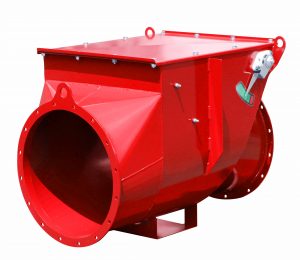
In short, inerting means bringing conditions to acceptable levels by eliminating the risks of explosion and fire so that the process can run safely. Inerting is usually considered for storage areas, reactors, in-process equipment and silos. Suspended dust combined with a critical temperature and a high oxygen level means the risk is always present. In such high-risk processes, the main objective is to control all factors that could lead to an explosion. Other passive prevention methods are explosion vents and isolation valves.
Pressure-actuated (passive) systems
These devices require no external power supply or electronic sensor; the process works entirely on physical principles:
• During normal plant operation, the air flow created by the extraction system holds the valve's internal mechanism in the open position.
• The moment an explosion starts, the shock wave travelling ahead of the flame front at close to the speed of sound reaches the pipeline.
• Within milliseconds of reaching the valve body, this leading pressure wave drives the internal flap into its seat with its own kinetic energy and locks it. The flame front that follows strikes the closed flap and is extinguished.
.
 Filter and Dust Collection Systems Catalogue