What is a starch/maltodextrin filter?
Filtration in maltodextrin production is a critical step for purifying and clarifying the liquid maltodextrin solution obtained after starch is broken down by enzymes (hydrolysis). Rather than a single filter, this process uses a combination of filters of different micron ratings and types at different stages of production. Maltodextrin is a white, odourless, slightly sweet powder that dissolves easily in water.
The filters used during storage of maltodextrin powder (silos, tanks or hoppers) are completely different from those in the liquid production stage. Maltodextrin is an extremely sensitive powder that is highly explosive, moisture-absorbing (hygroscopic) and prone to lumping.
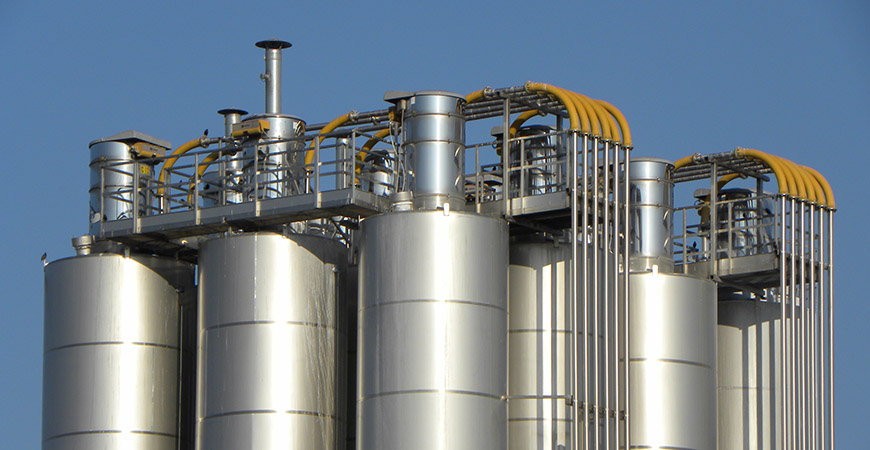
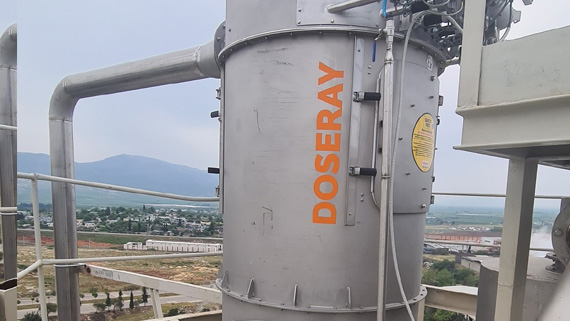
When maltodextrin is blown into a silo pneumatically (by air conveying), the air in the silo must be vented. To prevent fine maltodextrin dust from escaping during this process, silo-top DOSERAY antistatic ATEX pulse-jet filters are used. The main reason is that the properties of the filter media, the pleat spacing, the permeability relative to the air volume and the water-repellent, antistatic construction are suited to this application.
Filter element type: Cartridge (pleated / cassette) filters are preferred. With their large surface area, these filters let the silo breathe freely and prevent pressure build-up. Their construction is specially designed, right down to the pleat spacing.
Filter and Dust Collection Systems Catalogue (PDF)Filter and Dust Collection Systems Catalogue (PDF) General filter catalogue
.
ATEX in starch filtration processes
Raw material transfer and dust generation: maltodextrin belongs to the St1 class of combustible dusts, which can easily ignite from static electricity or a spark and cause a dust explosion (its minimum ignition energy, MIE, is very low at approximately 30–50 mJ). Every filter used in the system must therefore be suitable for this hazard. All the solutions we build for the starch industry are certified products that comply with the ATEX directives.
Maltodextrin absorbs atmospheric moisture very quickly; above 60% relative humidity it becomes sticky and sets rock-hard. A desiccant vent filter should be installed on the filter's air inlet line to dry the ambient air drawn in while the silo is discharging. Otherwise, moisture adheres to the filter bags and blocks the filter completely (blinding).

Using a cyclone upstream of the starch filter
Installing a cyclone (pre-separator) upstream of the main filter unit captures coarse, heavy and abrasive particles in the raw gas stream by centrifugal (cyclonic) force, increasing the service life and efficiency of the main system.
Key benefits of DOSERAY maltodextrin filters
-
Maltodextrin absorbs atmospheric moisture very quickly; once relative humidity exceeds 60%, it becomes sticky and hardens.
-
Desiccant vent filter: A desiccant vent filter must be installed on the vent inlet line to dry the ambient air drawn in while the silo is discharging. Otherwise, moisture adheres to the filter cartridges, causing the material to harden and the filter to clog completely (blinding). With DOSERAY filters, such problems do not push the process to a critical threshold. The other key features are listed below.
-
* Explosion safety and ATEX compliance: Manufactured in accordance with Directive 2014/34/EU (ATEX). Designed according to the hazardous area classification (Zone 20, Zone 21 or Zone 22) to prevent explosion risks caused by sparks or static electricity.
* Pressure-resistant housing design: Pmax 10 bar. Its thick-walled vertical housing withstands the pressure fluctuations and high differential pressures generated by pneumatic systems during silo filling.
* Special filter elements: Antistatic or specially coated cartridge / bag filter elements are used depending on the type, particle size and chemical properties of the material.
* Easy maintenance: The filter elements are quickly accessible through the front covers, allowing practical maintenance that keeps production downtime to a minimum and enables mechanical cleaning during shutdowns.
-
-
 Filter and Dust Collection Systems Catalogue