
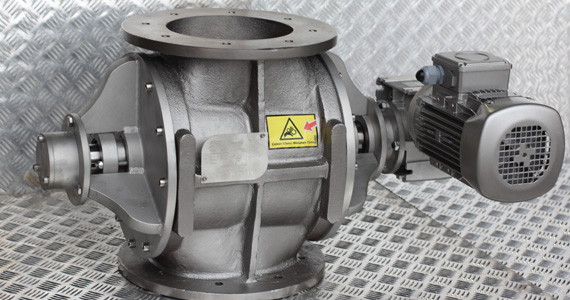
What Does a Rotary Valve Do?
Although rotary valves have various uses, these can be grouped under two main headings: first, feeding the material to be conveyed into the line in pneumatic conveying processes, and second, separating granular or powder material from air beneath filters and cyclones. A rotary valve can also be used as a dosing feeder and as a proportional discharger beneath silos.
A rotary valve has two functions: in the first, it feeds the product into the line and mixes it with air; in the second, it uses gravity to separate the product from the pressurised air. The vane design, tolerances and rotational speed of rotary valves vary with the type of process and the product being conveyed. Depending on the material, a rotary valve can also act as a crusher, or even work coupled with crushers. Rotary valves are manufactured in S235JR carbon steel, AISI 304 and AISI 316 stainless steel, Hardox and Ni-Hard. Bearing types and sealing elements (packing, mechanical seals, lip seals etc.) also vary with the process. Rotors can be supplied with blade tips, rounded pockets, adjustable vanes, scrapers or polyamide tips, among other options. An ATEX version of every series is also available, depending on your process. ATEX is a certified protection class; ATEX-version rotary valves are manufactured in compliance with the directives for high protection classes.
Process-Specific Rotary Valves
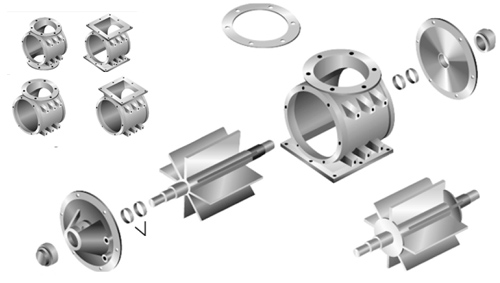
Rotary Valve (Airlock, Rotary Feeder) Rotor Types
-


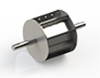
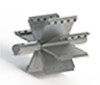
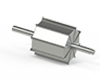
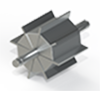
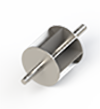
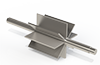
- A1-A2-A3: Open vanes
B1-B2-B3: Radiused (oval) vanes
C1-C2-C3: Adjustable and replaceable vanes
D1: Rotary valve with closed or adjustable rotor (dosing)
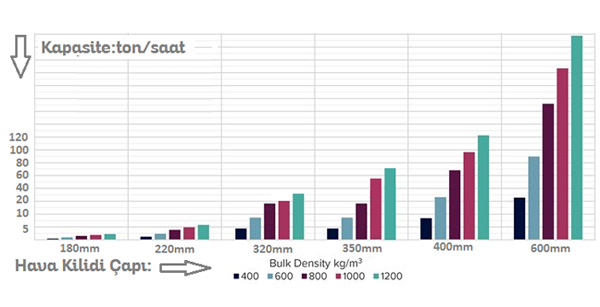
Rotary Valve Dimensions and Use
Drop-through type that takes the product in at the top and discharges it at the bottom (also known as an airlock or rotary feeder). Click for more information. Download the 3D PDF files to your computer before opening them.
Blow-Through Rotary Valve
This type takes in granular or powder raw material at the top and discharges it at the bottom by gravity and mechanical movement (also known as an airlock or rotary feeder). The only difference is that, as it is used in pneumatic lines, it has pipe inlet and outlet connections or an eductor. Its design and sealing elements are built for pneumatic conveying.
Wear-Resistant Rotary Valves
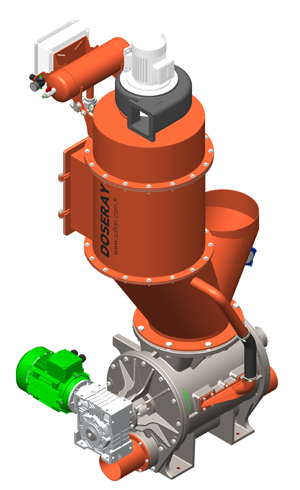
Wear-Resistant Rotary Valves
Rotary valves used in processes involving abrasive raw materials such as sand, ash (ash rotary valve), micronised calcite, dolomite, cement and quartz, particularly in the mining industry, must be built differently from their standard counterparts. These differences ensure that the process runs correctly and without interruption.
These differences fall under three headings:
1- Sealing elements (packing, lip seals etc.)
2- Wear-resistant housing design (lined or special alloy steel, Ni-Hard, carbide-type coatings)
3- Alloy steel rotors (Ni-Hard, Hardox, carbide-type coatings)
Internal design of the rotary valve: blow-through, standard and outboard-bearing rotary valves
There are other features that extend rotary valve service life, but these are the main ones that can be considered in general. Our rotary valves can be manufactured in all sizes with any of the optional features required.
In addition, if the system operates under pressure, this pressure puts the whole system under greater load and accelerates wear. The abrasive raw material mixed with air tries to escape through the sealing elements in particular; over time this first damages the seals, causing dust emissions, and then damages the housing and end covers.
Drop-Out Box and Eductor Solutions
In some processes you may want to use a rotary valve within a pneumatic conveying system, but the direction of the pipe inlet and outlet may cause problems, or you may not want to dismantle pipes during maintenance. In such plants, a standard rotary valve is used instead of a blow-through valve, and an adapter creating a venturi effect is fitted beneath it. This way, the connected lines do not need to be dismantled when servicing the rotary valve.
To prevent the wear process described above and to extend this natural process in a controlled manner, the right selection must be made. In such abrasive processes, equipment inevitably has a limited service life; what matters is avoiding unplanned shutdowns. Even if the rotary valve is damaged, it must keep running and, in 24/7 plants, last until the first planned shutdown.
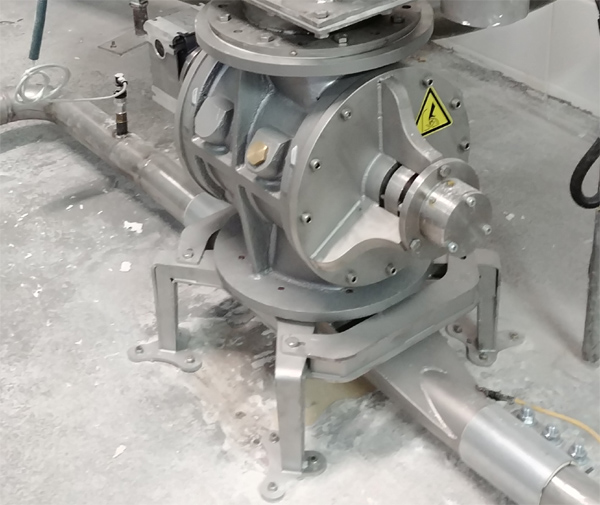

 Rotary Valve Catalogue