
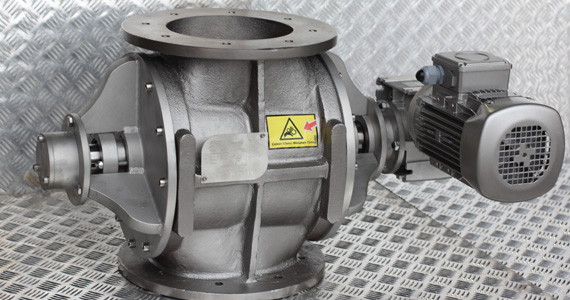
What Does a Rotary Valve (Rotary Feeder) Do?
"Rotary feeder" is one of several industry-specific names for the same equipment as a rotary valve (airlock). In short, a rotary feeder is a rotary valve. Although rotary valves are used in different ways, their uses can be grouped under two main headings: first, feeding the material to be conveyed into the line in pneumatic conveying processes, and second, separating granular or powdered material from the air under filters and cyclones. They can also be used as dosers and as proportional dischargers under silos.
How Are Rotary Valves (Airlocks, Rotary Feeders) Used?


In other words, this unit has two functions: in one it mixes the product with air, while in the other it uses gravity to separate the product from the compressed air. Rotor vane designs, clearances and rotational speeds vary according to the type of process and the product to be conveyed. Depending on the properties of the material, it can also act as a crusher, or even operate coupled with crushers.
Rotary valves (airlocks, rotary feeders) are manufactured in ST37 carbon steel and AISI 304 and AISI 316 stainless steel. Bearing and sealing arrangements (mechanical packing, felt seals, etc.) can also vary with the process.
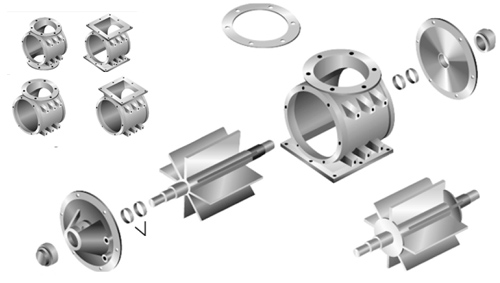
The internal rotors of rotary valves can be supplied with bladed, rounded, adjustable-vane, scraper and polyamide options. This gives the rotary valve the flexibility and versatility to be used in any process.
The reason rotary valves are produced in so many different variants lies entirely in the type of material conveyed and the process. This is so important that a single mistake can even damage the conveyed material. Simple off-the-shelf solutions may perform well when conveying flour, cement and many other materials; however, a slightly different particle size or material can mean these devices no longer do their job.
For example, you cannot use the rotary valve you use for cement with sunflower seeds. The main reason is that sunflower seeds are oily: oil is released from kernels damaged as they are sheared by the steel vanes, and over time the rotor pockets fill up with sunflower seed particles. As the process runs, the pockets eventually become half full and your conveying capacity drops by 50%.
Rotary valves used at high pressure can damage your bearings if they are not selected correctly, and the wrong vanes can cause the material to be ground or even to wrap around the rotor. Experience has taught us that every process has its own regime. For this reason, you need to select a solution based on a separate specification for each process and capacity.
Rotary Valve – Rotary Feeder – Airlock Applications
They are used to discharge material under pulse-jet filters and in separators, to feed material from a hopper or silo into the pneumatic line, to separate air from dusty material, to feed material proportionally into the pneumatic line during big bag discharging, and for gravimetric dosing.
Rotary Valve (Airlock, Rotary Feeder) Rotor Types
-


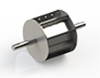
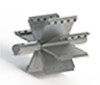
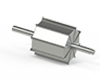
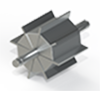
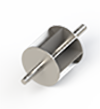
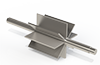
- A1-A2-A3: Open vanes
B1-B2-B3: Radiused (oval) vanes
C1-C2-C3: Adjustable and replaceable vanes
D1: Rotary valve with closed or adjustable rotor (dosing)
Rotary Valve Dimensions and Use
Drop-through type that takes the product in at the top and discharges it at the bottom (also known as an airlock or rotary feeder). Click for more information. Download the 3D PDF files to your computer before opening them.
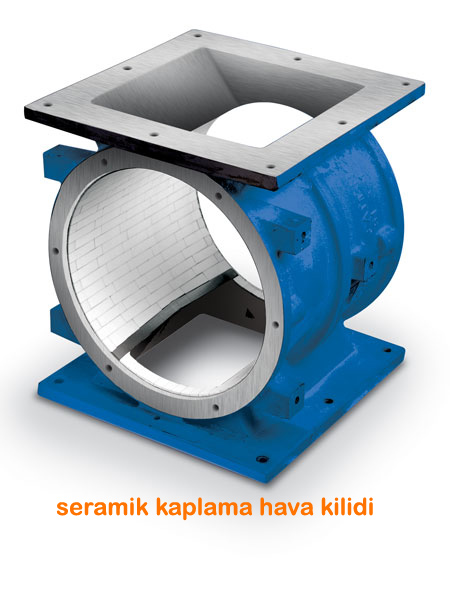
Wear-Resistant
Rotary Feeder
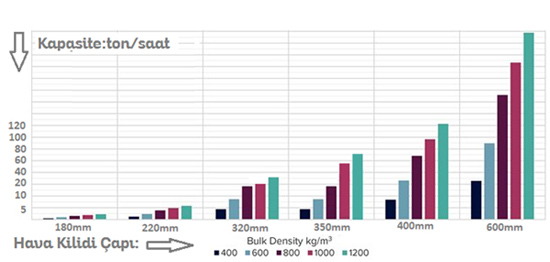
Drop-Out Box and Eductor Solutions
In some processes, you may want to use a rotary valve within a pneumatic conveying system, but the pipe inlet and outlet directions may cause problems, or you may not want to remove pipework during maintenance. In such plants, a standard rotary valve can be used instead of a blow-through rotary valve, with a fitting that creates a venturi effect mounted underneath. This way, the connected lines do not have to be dismantled when servicing the rotary valve.
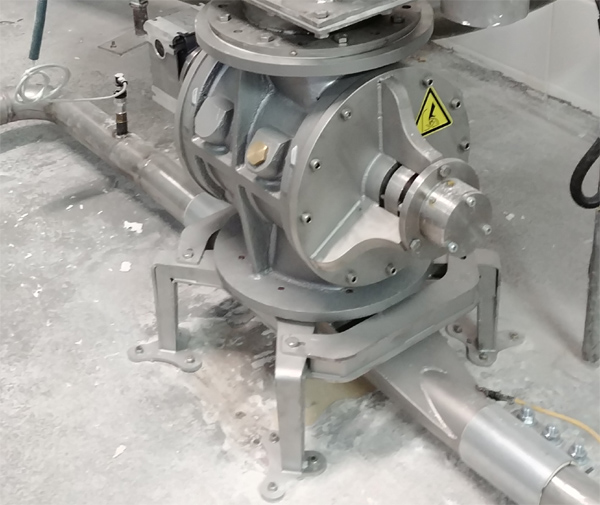
Our airlocks can be built in every diameter we manufacture, with any optional features required.
If the system operates under pressure, the pressure puts the whole system under greater load and accelerates wear. Abrasive material mixed with air tries to escape, especially through the sealing elements; over time it first damages the seals, causing dust emissions, and then damages the housing and end covers.
The right selection is essential to prevent this or to extend it in a controlled way. In abrasive processes, equipment life is inevitably limited; what matters is avoiding unplanned shutdowns. Even when damaged, an airlock should keep running and, in plants operating 24/7, last until the next planned shutdown.
 READ MORE
 Rotary Valve Catalogue