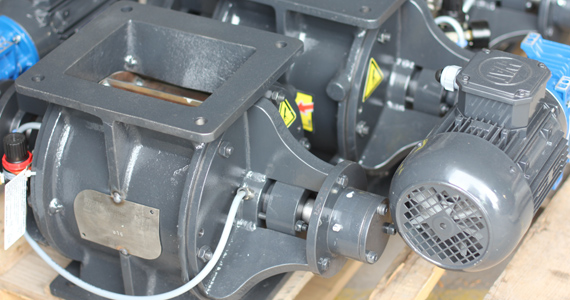
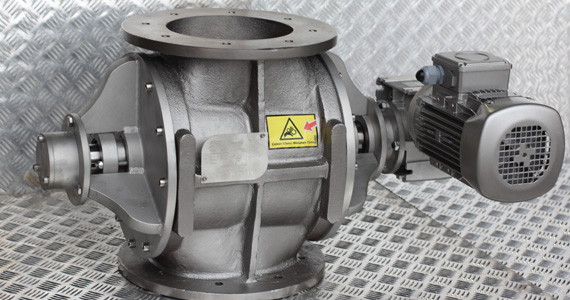
Rotary Valve Applications
Although a rotary valve basically has two functions, the way it is used can vary with the process. The main applications are:
Hopper Discharge with Rotary Valves
This method is preferred when proportional discharge is required. It plays an important role in transfer to mechanical conveying equipment such as belt conveyors and screw conveyors; by ensuring controlled discharge, it prevents sudden discharges from overloading downstream equipment.
Silo Discharge with Rotary Valves
Rotary valves play an effective role as auxiliary equipment in discharging products from storage silos. Beneath the silo, they can work in sync with vibrating discharge cones or pneumatic lines. In pneumatic conveyors, their shape and type differ depending on whether the system is vacuum or pressure.
Using Rotary Valves with Bulk Tanker Loading Bellows
Bulk tanker loading bellows and stations allow product to flow from the hopper into the tanker under its own weight. Since sudden product loading would put stress on the loading bellows, a rotary valve must always be installed in between. This prevents both dust emissions and damage to the bellows.
Using Rotary Valves as Protection in Vacuum Processes
Rotary valves are used to isolate dryers, filters or special processes that are particularly sensitive to atmospheric conditions from the outside environment. If the process is affected by atmospheric conditions and the system needs to be isolated, the rotary valve is the most effective device for the job.
Rotary Valve (Airlock, Rotary Feeder) Rotor Options
-
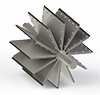
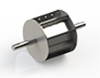
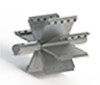
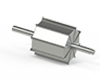
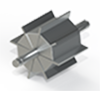
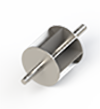
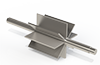
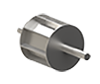
- A1-A2-A3: Open vanes
B1-B2-B3: Radiused (oval) vanes
C1-C2-C3: Adjustable and replaceable vanes
D1: Rotary valve with closed or adjustable rotor (dosing)
Rotary Valve Housing Options
For abrasive products in particular, housings of a different design are recommended; otherwise friction can cause serious housing problems over time. The same applies to products that may react chemically. Rotary valve housing options have therefore been diversified as follows.
Rotary Valve Bearing Options
The bearing arrangement of a rotary valve is as important as the housing and rotor options and can vary with the process. The main bearing types are listed below. In all our bearing arrangements the bearings are outboard, which makes maintenance and replacement easy.
Wear-Resistant
Rotary Valves
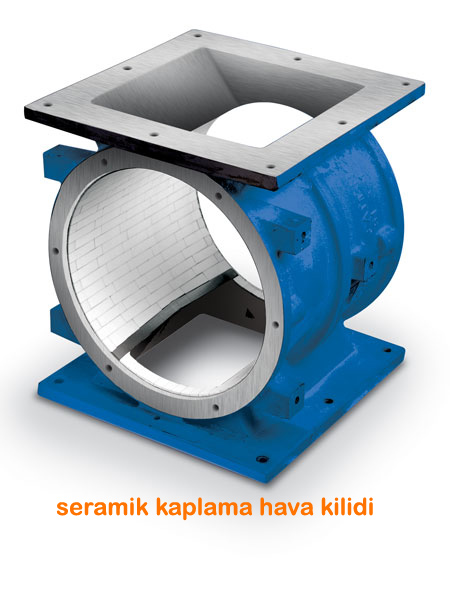
Our rotary valves can be manufactured in all sizes with any of the optional features required. Above you can see a rotary valve with a ceramic-lined housing.
Rotary valves used in processes involving abrasive raw materials such as sand, ash, micronised calcite, dolomite, cement and quartz, particularly in the mining industry, must be built differently from their standard counterparts. These differences ensure that the process runs correctly and without interruption.
These differences fall under three headings:
1- Sealing elements (packing, lip seals etc.)
2- Wear-resistant housing design (lined or special alloy steel, Ni-Hard, carbide-type coatings)
3- Alloy steel rotors (Ni-Hard, Hardox, carbide-type coatings)
Internal design of the rotary valve: blow-through, standard and outboard-bearing rotary valves
There are other features that extend rotary valve service life, but these are the main ones that can be considered in general. Our rotary valves can be manufactured in all sizes with any of the optional features required.
In addition, if the system operates under pressure, this pressure puts the whole system under greater load and accelerates wear. The abrasive raw material mixed with air tries to escape through the sealing elements in particular; over time this first damages the seals, causing dust emissions, and then damages the housing and end covers.
 Rotary Valve Catalogue