





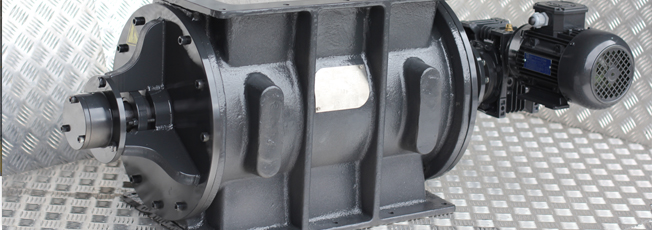
AIRLOCK
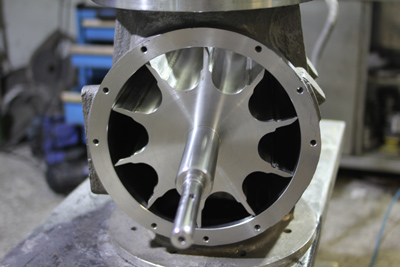
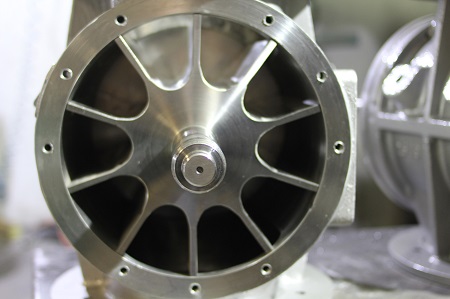
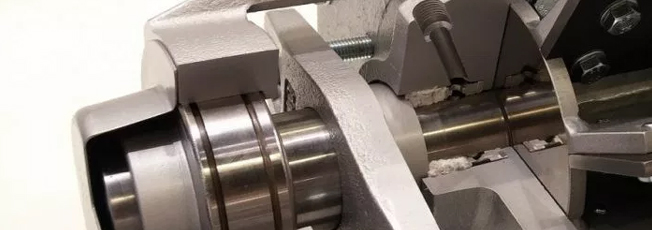
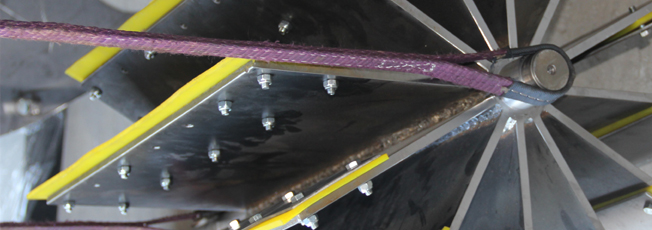
In a self-cleaning cell wheel sluice, the pockets are designed with rounded rather than sharp corners. Flexible scrapers can be added to the rotor vanes, or purge air inlets in the housing empty the pockets on every revolution. As a result, the line needs to be stopped for maintenance less often.
What is a self-cleaning airlock and where is it used?
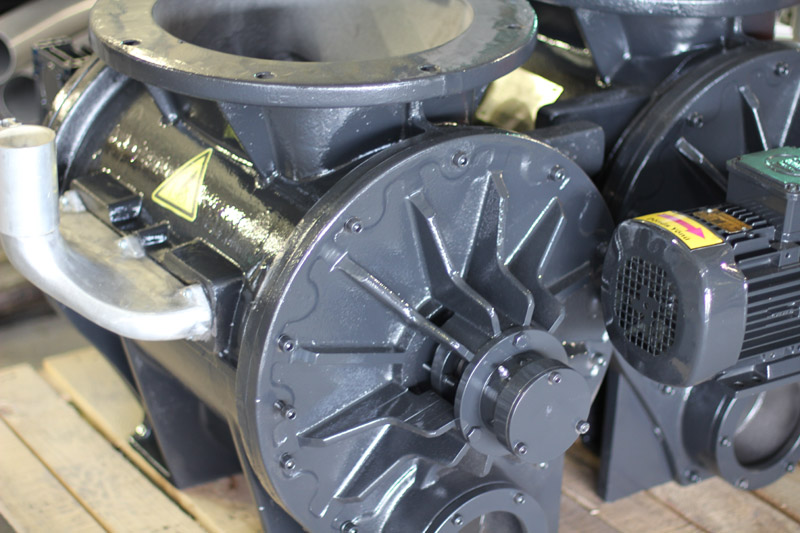
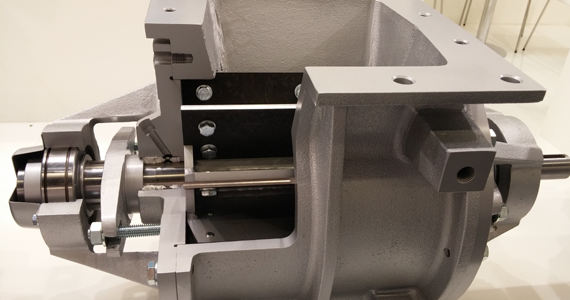
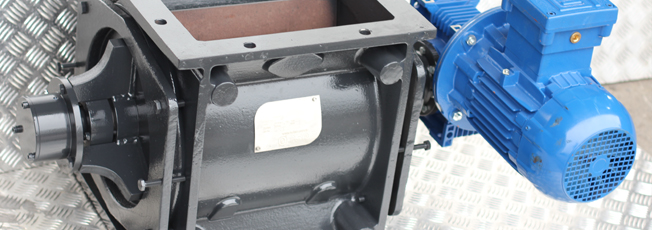
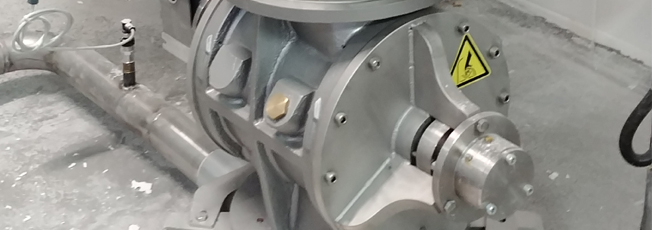
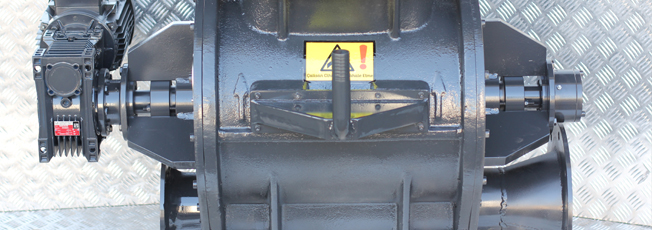
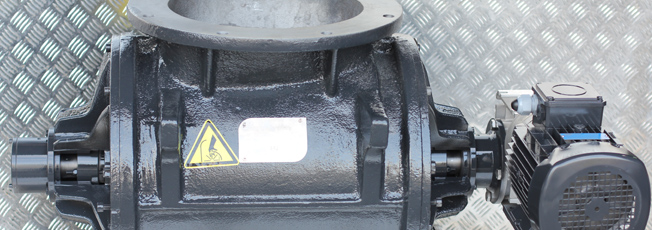
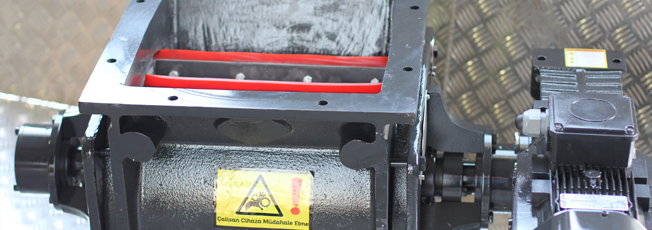
In some processes, the rotor pockets of an airlock fill up very quickly, deposits build up and the airlock can no longer do its job. The solution to such problems is a self-cleaning airlock. Known as a self clean rotary valve, this device differs from standard versions in that it includes additional mechanical systems. These keep the inside of the rotor clean at all times and prevent build-up, avoiding problems such as loss of capacity and process stoppages.

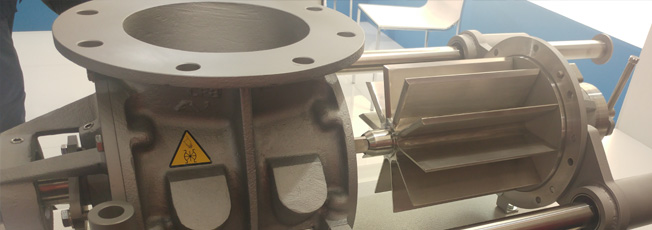
The self-cleaning rotor can be combined with a quick-release (withdrawable) housing, food-grade polyamide scrapers and stainless steel surface options. The right combination depends on the moisture, fat and sugar content of the product.
-


-
Eductors and Self-Cleaning Rotary Valves
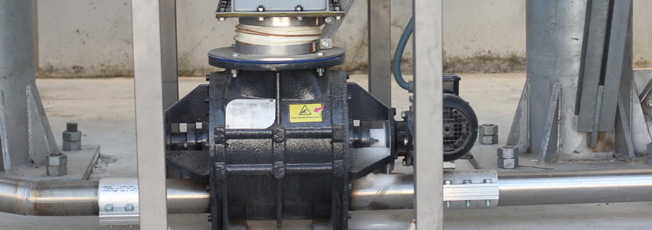
Although in some processes the rotary valve is used within the pneumatic conveying system, the pipe inlet and outlet directions can cause problems during maintenance; dismantling the pipes for maintenance is undesirable. In such plants, instead of a blow-through rotary valve (airlock), a standard rotary feeder can be used with a venturi-effect device fitted underneath. This way the connected lines do not have to be dismantled when servicing the rotary valve, giving the process greater flexibility. -

- In some processes, the requirements may not fit any standard or size. Limited headroom, flowability problems, product type and similar factors may call for a different rotary valve solution.
In such cases, a solution with airlocks (cell wheel sluices) connected in series, known as a tandem or multiway port rotary valve, comes into play.
Mounting cell wheel sluices in series within limited headroom provides advantages such as high capacity and feeding and discharging over a wider cross-section.
Belt feeding, spreading raw material onto belt conveyors and conical discharges with square construction are the main applications.
Multiway rotary valve
-
-
Rotary Valves and Air Leakage
This topic often leads to misunderstandings and incorrect use. It should be remembered that every rotary valve needs a running clearance in order to rotate, which means there is a gap between the housing and the rotor. On leaving the factory, this clearance is generally set to 0.15–0.30 mm on all rotary valves. If the system performs pneumatic conveying and the conveyed material is somewhat abrasive, this clearance can increase over time. Increased clearances can lead to air leaking upwards through the rotary valve (blow-back) and to bridging problems.
- To prevent such situations, the leakage air must be vented, especially in blow-through rotary valves. If venting is done correctly, rotary valves can operate without problems with wear up to a clearance of 1 mm. That is why venting of the leakage air and the orientation of the rotary valve are important on all pneumatic conveying lines. Otherwise, performance problems arise in the system even with very slight wear.
-
- For airlocks in processes with a risk of wear, vane thickness, high-alloy steel vanes, end covers, speed and the venting of leakage air are important. Product selection therefore needs careful attention from the outset.
.


Rotary Valve Technical Dimensions
Self-clean rotors are compatible with our standard housing dimensions; you can also upgrade an existing airlock simply by replacing its rotor.
Standard Rotary Valve Models
Every standard model is available with a rounded-pocket rotor and a scraper rotor option.
Rotary Valve Capacity Table


The rounded pocket design slightly reduces pocket volume for the same housing diameter. This difference must be taken into account when calculating capacity; share your product data with us so we can select the right model.

 Rotary Valve Catalogue