
Rotary Valve Applications
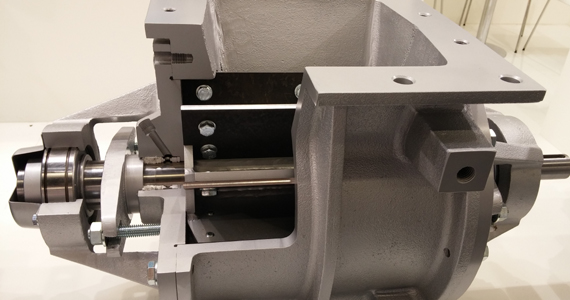
A rotary valve is a device installed beneath filters or cyclones that separates powder or granular material from the air.
What Is a Rotary Valve?
A rotary valve is a device installed beneath filters or cyclones that separates powder or granular material from the air.
Rotary valves and star feeders can be made of ST37 and ST52 carbon steel, Hardox, Ni-Hard, and AISI 304 or AISI 316 stainless steel. Bearing and sealing types (mechanical seal, packing, etc.) also vary with the process. Rotary valves used in hot processes or for conveying highly abrasive materials are built to different specifications.

Rotors can be supplied with bladed, rounded, adjustable-vane, scraper or polyamide options. The reason a rotary valve has so many options lies entirely in the type of material conveyed and the process. This choice is so important that a mistake can even damage the material being conveyed. Simple off-the-shelf solutions can work well for flour, cement and many other materials; however, even small differences in particle size and material properties can cause these devices to stop performing. Rotary valves must therefore be selected for the process with great care.
Process-Specific Rotary Valves
Rotary Valve – Airlock Rotor Types
-

- A1-A2-A3: Open vanes
B1-B2-B3: Radiused (oval) vanes
C1-C2-C3: Adjustable and replaceable vanes
D1: Rotary valve with closed or adjustable rotor (for dosing)
Rotary Valve
Type that takes product in at the top and discharges it at the bottom (also known as an airlock or rotary feeder).
Blow-Through Rotary Valve
This type takes granular or powdered raw material in at the top of the unit and discharges it at the bottom by gravity and mechanical motion (also referred to as an airlock or rotary feeder; the only difference is that, because it is used in pneumatic lines, it has pipe inlet/outlet connections or an eductor).
Wear-Resistant
Products


Rotary valves are mainly used to discharge material collected in pulse-jet filters and cyclones, in separators, and to feed material from hoppers into the pneumatic line; in short, to separate dusty material from the air and for gravimetric dosing.
Pneumatic conveying processes differ by phase and also vary within the same phase. In low-pressure, i.e. dilute phase conveying, rotary valves can be classified into two groups: vacuum and pressure. Although minor, this classification leads to differences in rotary valve design. We therefore build the rotary valves for vacuum and pressure lines to suit your process.

 Rotary Valve Catalogue