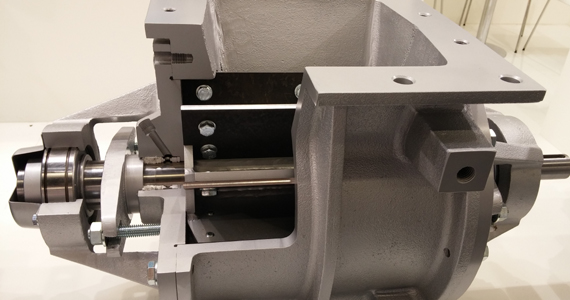

What is a rotary valve?
A rotary valve is the rotating equipment that feeds bulk solid raw material to be conveyed pneumatically into the pneumatic conveying line, and it can vary depending on the process in which it is used. Although rotary valve is the general term, depending on the industry it is also called a star feeder, an airlock or a rotary feeder.
Where are rotary valves used?
Although rotary valves and airlocks are basically the same, they serve different functions; any airlock can also be used with an eductor instead of a rotary valve. While a rotary valve mixes the product with air, an airlock uses gravity to separate the product from the compressed air with the help of a cyclone or filter. The vane design, tolerances and speed of a rotary valve vary with the type of process and the type of product to be conveyed. Depending on the properties of the material, a rotary valve can also act as a crusher or even operate coupled with crushers. Rotary valves are manufactured in ST37 carbon steel, AISI 304 and AISI 316 stainless steel, Hardox and Ni-Hard. Bearing types and sealing elements (packing gland, mechanical seal, lip seal) also vary with the process. Rotor options include bladed, rounded, adjustable-vane, scraper and polyamide types. A rotary valve is also called a blow-through rotary valve. Depending on your process requirements, ATEX versions of all series are also available. ATEX-certified airlocks are manufactured in compliance with high protection-class directives.
Main types of rotary valves
Rotary valve (airlock) rotor types
-

- A1-A2-A3: Open-vane
B1-B2-B3: Radiused / oval-vane
C1-C2-C3: Adjustable and replaceable vanes
D1: Rotary valve with closed or adjustable rotor (dosing)
Rotary valve
This type takes granular or powdered raw material in at the top of the unit and discharges it at the bottom by gravity and mechanical motion (also referred to as an airlock or rotary feeder; the only difference is that, because it is used in pneumatic lines, it has pipe inlet/outlet connections or an eductor).
Wear-resistant
rotary valves

Airlocks and rotary valves in all the sizes we produce can be built with the optional features your process requires.
If the system operates under pressure, that pressure places the entire system under greater load and accelerates wear. Abrasive raw material mixed with air tries to escape, especially through the sealing elements; over time it first damages the seals, causing dust emissions, and then damages the housing and end covers.
To prevent this and to extend the natural wear process in a controlled way, the right selection must be made. In such abrasive processes the product will always have a certain service life; what matters is avoiding unplanned shutdowns. Even when damaged, a rotary valve should be able to keep running and, in 24/7 plants, last until the next planned shutdown.

 Rotary Valve Catalogue