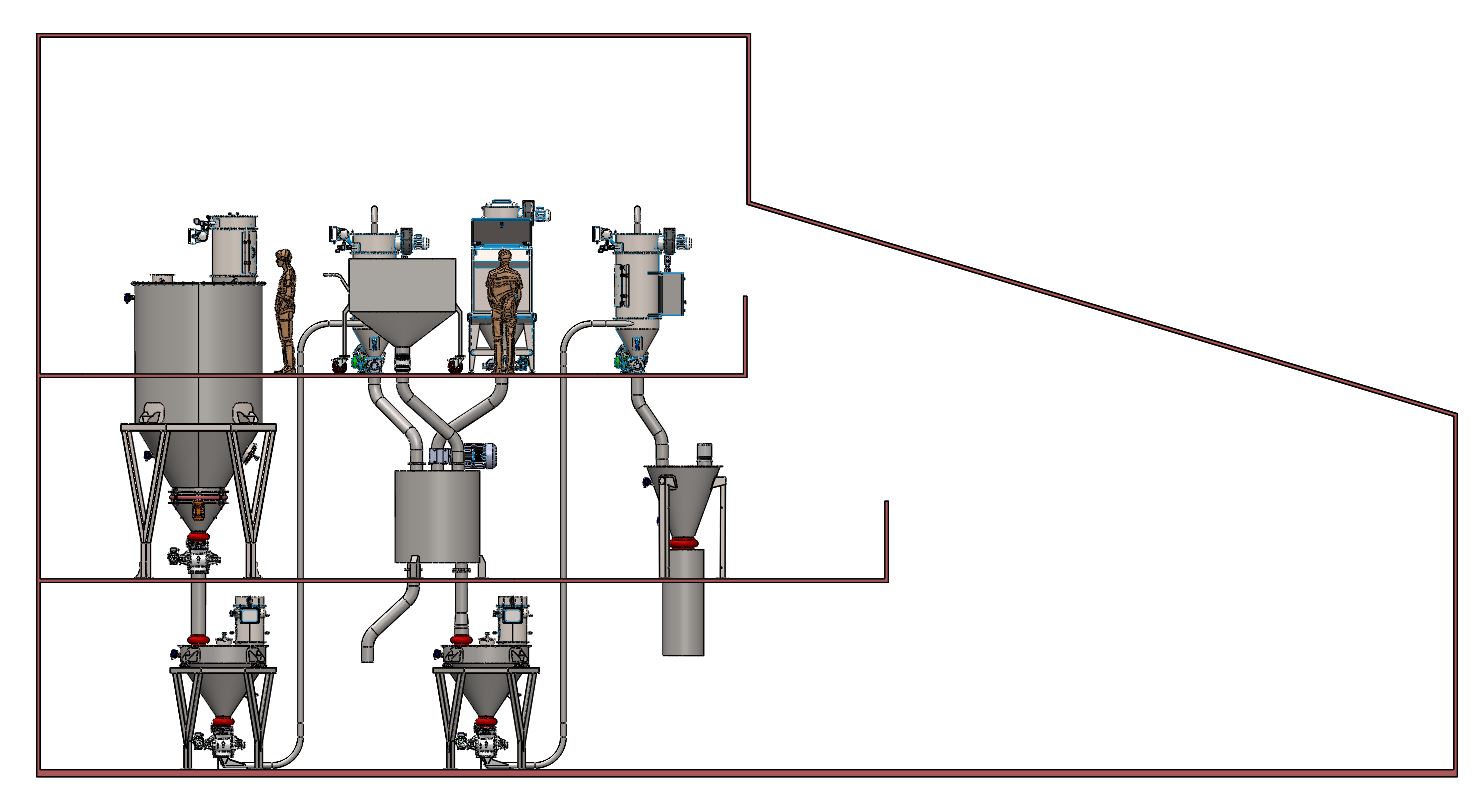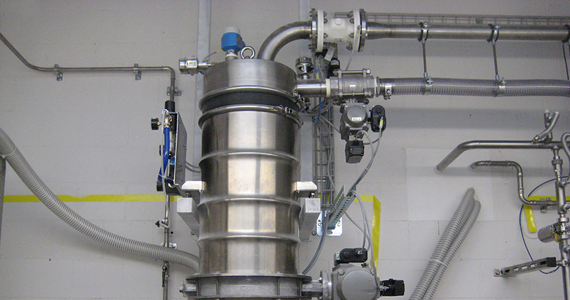
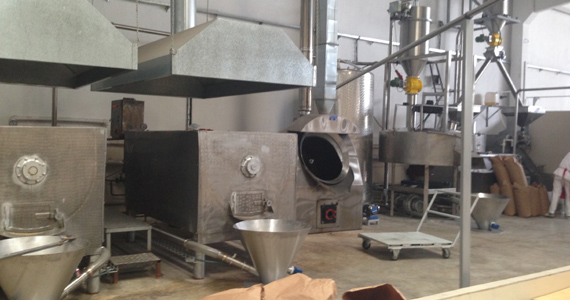
What is a vacuum conveyor?
Dilute phase pneumatic conveying is carried out in two ways: by vacuum or by pressure. A conveying system operating under negative pressure is called vacuum conveying or, in other words, a vacuum conveyor. The most important point when conveying a product by vacuum is to ensure the system has an air inlet. A household vacuum cleaner is the best example of the vacuum method. Vacuum conveying systems generally operate at a maximum of -500 mbar. The products conveyed most efficiently are those in grain or granule form. For powdered products, a filter is used to separate the product from the air. In vacuum conveying the filter area must be larger than in a pressure system; in short, the vacuum conveyor method puts an extra load on the filters. Besides blowers, vacuum pumps and high-pressure compressed air can also be used as the suction source.
Related topics: Raw material loaders, Raw material loaders for extruders

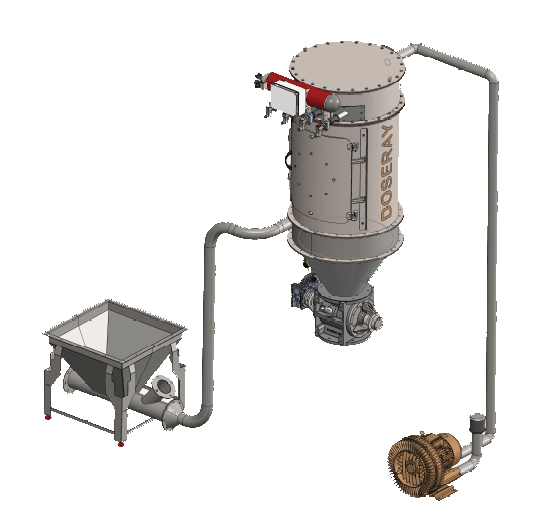
How does vacuum conveying work?
Every product conveyed by air is first mixed with air and then separated from it. Although these two operations are demanding, the method is always preferred because of its flexibility.
Mixing is done with rotary valves, loading stations and venturis, while separation can be done with filters or by drawing suction from a vacuum receiver. Particularly for plastics and granular products, drawing directly from big bags is one of the most effective methods. Systems that draw directly from a suction box or a bag need no additional equipment. The equipment known as a separator or filter separates the air and the product and differs according to the raw material. In short, pneumatic conveying means dust – it means separating dust from air.
Vacuum Conveying Experience
In pneumatic conveying, every product has different characteristics. As a result, each product has a different density and a different efficient conveying pressure or vacuum level, and this determines the conveying method. Vacuum conveying and pressure conveying are the two main methods. If you try to convey sugar on a line built for plastic raw materials, using the same equipment without any changes, your process will most likely fail and none of your equipment will work properly. If the process is designed correctly and run with the right instruments and equipment, successful results can be achieved simply by changing parameters in the automation. This example shows how important a solid foundation and experience are in practice.
Why Vacuum?
Vacuum conveyors are ideal for low-capacity applications. Thanks to their compact design, they have always been a popular and preferred conveying method. Although they have capacity disadvantages compared with pressure conveying, they are indispensable in some cases, depending on the type of process. They deliver very good results, particularly in simple, small-scale applications.
Why Choose Vacuum Conveying?
Pneumatic conveying (vacuum conveying) and vacuum conveyors are the most flexible conveying methods compared with screw, belt and chain conveyors. Although they have to work together with a number of auxiliary instruments and dust collection systems, this flexibility makes them the most widely chosen conveying system. Depending on the process, they can be combined with a flap valve or a rotary valve. If the system is suited to intermittent operation, a flap valve system is usually preferred.
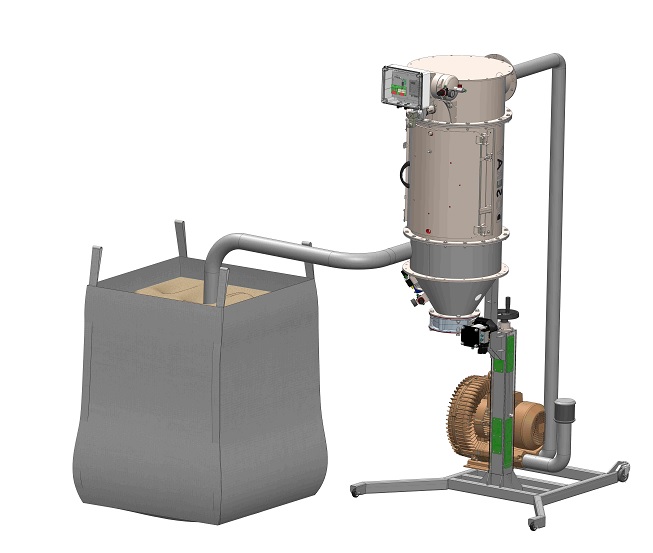
Mobile vacuum loader systems – mobile vacuum cleaners
In processes it is sometimes necessary to move bulk raw material flexibly from point A to point B. In such cases, powdered or granular bulk solids can be drawn from big bags or from an open area on the floor and fed into the process. The schematic below is the best example of this. By changing the nozzle, the equipment can also be used as a mobile unit, working like a vacuum cleaner. If products are supplied in 25 kg bags, they are fed into the process using a suction box.
 Pneumatic Conveying Catalogue