Material Loader Systems
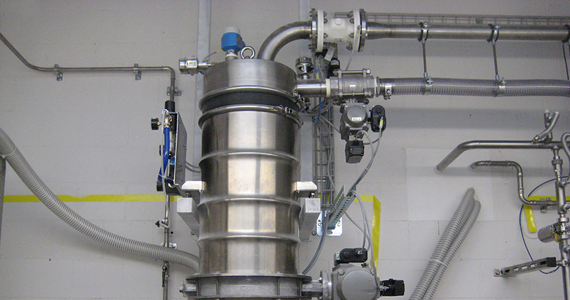
Our material loader systems for plastic injection moulding machines and extruders are built in various capacities and in different designs depending on the product (bulk solid) to be conveyed. They are suitable for conveying powders, granules, regrind, flakes and similar materials. Unlike similar products, they can handle flakes, granules and powders alike. The loader systems we manufacture are cyclone-filtered.
All units have an automatic cleaning system and are very easy to maintain and install. They have a stainless steel hopper and level sensors, and come in two models: machine-side and machine-mounted. The product is 100% made in Türkiye.
Material Loader Package System Features
7” colour touchscreen
PLC-controlled control panel with visual messages
Adjustable filter cleaning interval
2 level sensors (full, empty)
Time-based suction program
Special suction nozzle adjustable to the product type
Vacuum transmitter and beacon light
How Do Material Loaders Work?
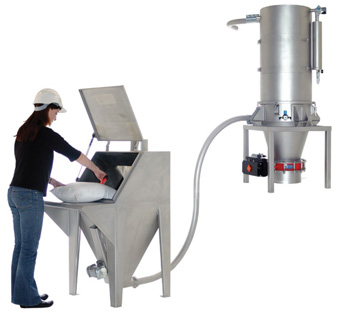
All loader systems work on the cyclone principle: the material is drawn in through a tangential inlet, creating a vortex in the cyclone. The vortex lets the product fall under gravity while the dirty air passes through a filter or separator, is cleaned and is exhausted through the blower. These loaders generally use a centrifugal blower, so even if some dust escapes the filter, the blower is not seriously damaged.
Vacuum Conveying Experience
In pneumatic conveying, every product has different characteristics. As a result, each product has a different density and a different efficient conveying pressure or vacuum level, and this determines the conveying method. Vacuum conveying and pressure conveying are the two main methods. If you try to convey sugar on a line built for plastic raw materials, using the same equipment without any changes, your process will most likely fail and none of your equipment will work properly. If the process is designed correctly and run with the right instruments and equipment, successful results can be achieved simply by changing parameters in the automation. This example shows how important a solid foundation and experience are in practice.
Why Vacuum?
Vacuum conveyors are ideal for low-capacity applications. Thanks to their compact design they have always been an attractive and popular conveying method. Although they are at a disadvantage in capacity compared with pressure conveying, they can be indispensable in some cases depending on the type of process.
Why Choose Vacuum Conveying?
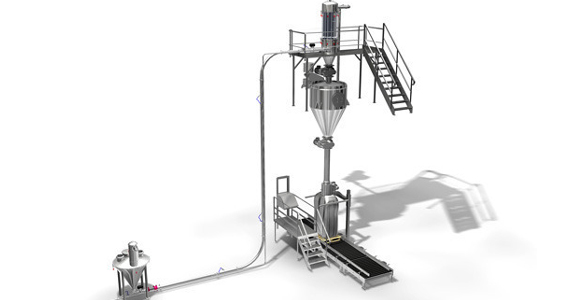
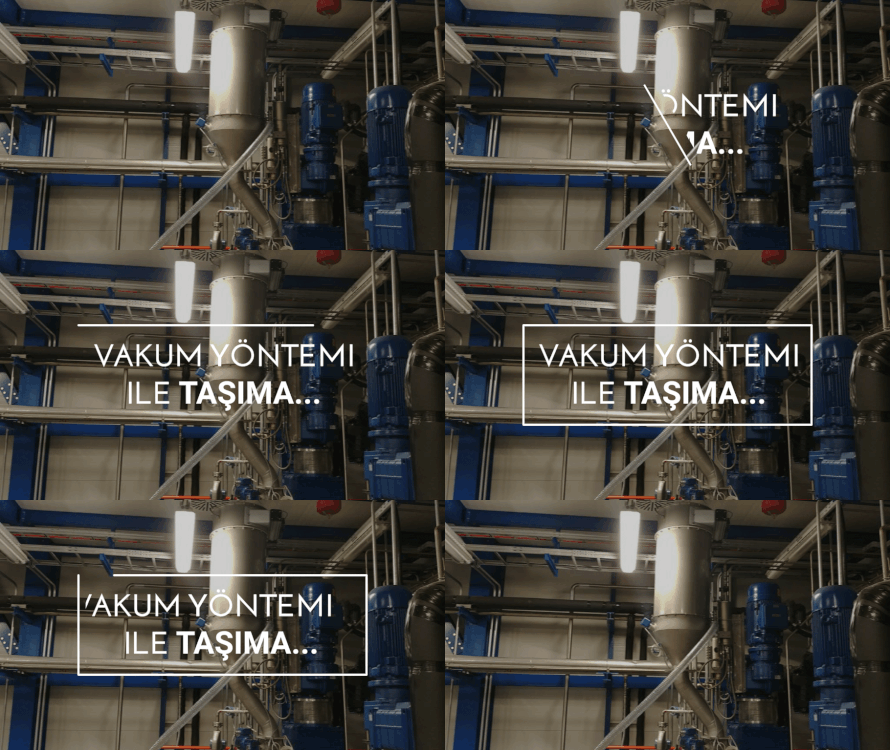
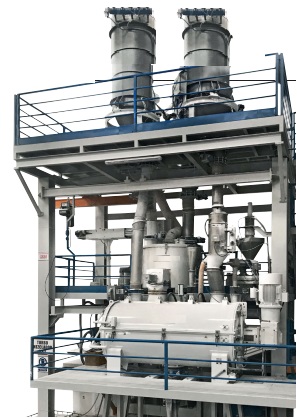
Pneumatic conveying (vacuum conveying) is the most flexible conveying method compared with screw, belt and chain conveyors. Although it has to work together with many auxiliary instruments and dust collection systems, this flexibility makes it the most widely used conveying system. A vacuum big bag filling system is shown above as an example.
 Pneumatic Conveying Catalogue