Flexible Screw Conveyor Types and How They Work
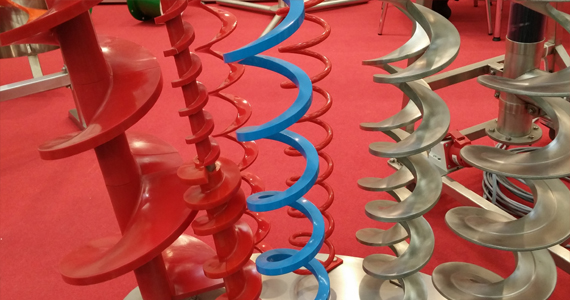
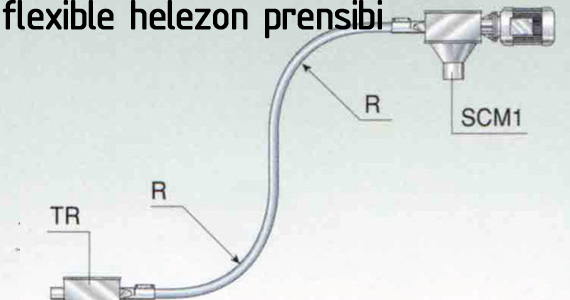
A flexible screw has no central shaft. A spring spiral wound from high-strength steel rotates inside a plastic or stainless steel tube and pushes the product forward. Because the spiral is flexible, the line can be bent to a given radius and routed around obstacles.
Where Flexible Screws Are Used
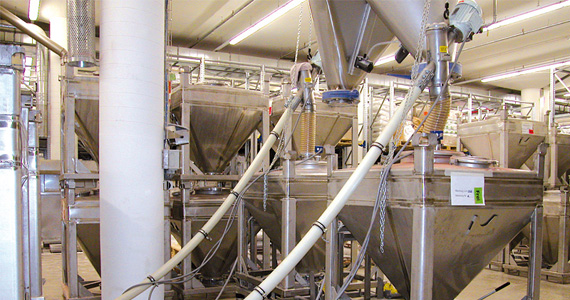
Flexible screws are widely used to transfer product from a bag tipping station to a mixer or filling machine, from a small hopper to an extruder, or from additive dosing into the main line. Because they run inside an enclosed tube they release no dust, and the same equipment can convey on both horizontal and vertical runs.
The limits of this system are distance and capacity: the longer the line, the greater the load the spiral has to carry. Flexible screws are therefore suited to short- and medium-distance transfers at low to medium capacities. For long distances pneumatic conveying is the better choice, and for high capacities a shafted screw conveyor.
The spiral profile is selected to suit the product: round-section spirals work better with free-flowing powders, while flat-section spirals give better results with sticky products and products prone to bridging.
What Is CEMA for Screw Conveyors?
As with flexible screws, capacity, speed and fill-ratio calculations for shafted screws are carried out according to CEMA principles.
Micro-Dosing and Custom Builds
Small-diameter flexible screws can also be used as feeders for micro-dosing additives.
Standard Screw Conveyor
Types
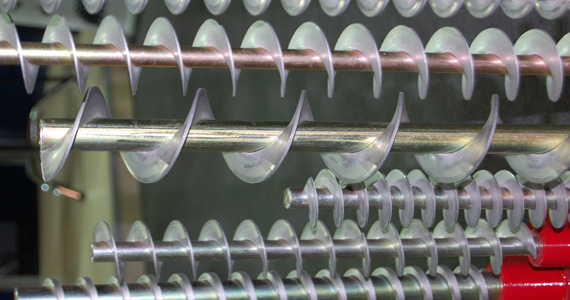
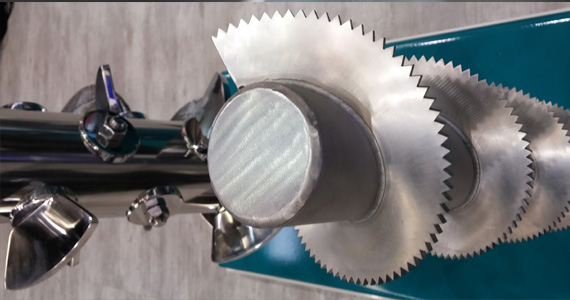
Alongside flexible screws, our standard range also includes shafted, tubular, U-trough and stainless steel screw conveyors.
- Stainless steel screw conveyors are classified as 1. O-tube stainless steel screw conveyors
2. U-trough stainless steel screw conveyors
3. Conical stainless steel screw conveyors
4. Flexible shaftless stainless steel screw conveyors. Based on the information you provide, we manufacture all screw conveyors with flight diameters from 15 to 1,000 mm. -
 Screw Conveyor Catalogue