What Is a Screw Conveyor and Where Is It Used?
A screw, or screw conveyor, is equipment that moves powders and granular bulk solids through a tube or trough by mechanical rotation. Although mechanical conveying (screw conveyors, bucket elevators, etc.) may seem difficult and has some limitations, it is the most economical solution in terms of power consumption. Screw conveyors are rarely chosen for long distances because of the high investment cost, but their operating costs are very low.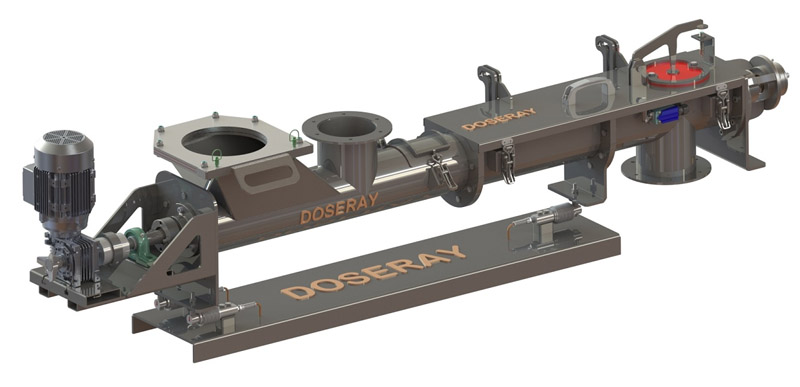
Depending on how they are fed, screw conveyors can also work as feeders, conveyors or dosing units. If a screw conveyor is fed consistently at the same capacity, it conveys raw material at a constant rate and can also dose. This concept generally applies to "O"-type screw conveyors. The capacity of a screw conveyor is proportional to the pitch of the screw flights and the motor speed. All the screw conveyor types we manufacture are designed to CEMA standards. Bearings, safety measures, bearing standards and flight thicknesses are important elements of these standards.
What Does Building Screws to CEMA Mean?
CEMA is perhaps the most important standard to consider when manufacturing or buying a screw conveyor or auger. It brings together the standards that key elements such as bearings, inlets and screw type must meet. The other factors that determine the screw type are the process conditions and the characteristics of your bulk solid or granular raw material, such as bulk density and abrasiveness.
Using Micro-Dosing Screws
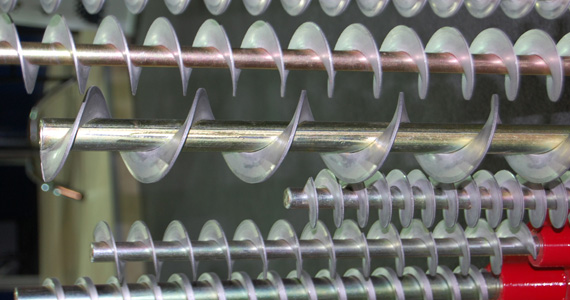
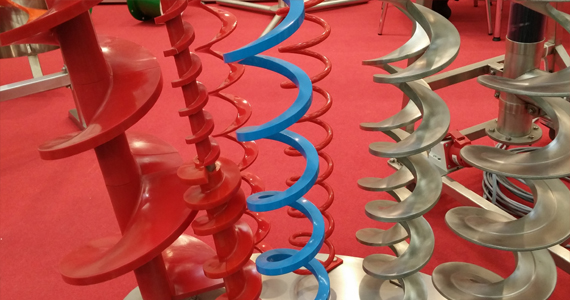
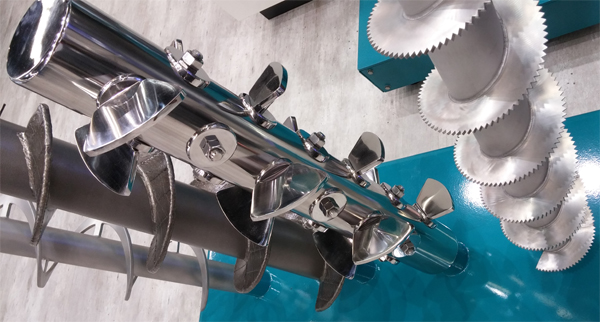
Screw flights are made by cold drawing; for large-diameter screws, laser cutting followed by drawing is used. Our production programme covers both complete assemblies and semi-finished parts (flight and shaft). Very small screws are also known as micro-dosing screws, and these are part of our manufacturing programme too.
DOSERAY Horizontal and Vertical Screws
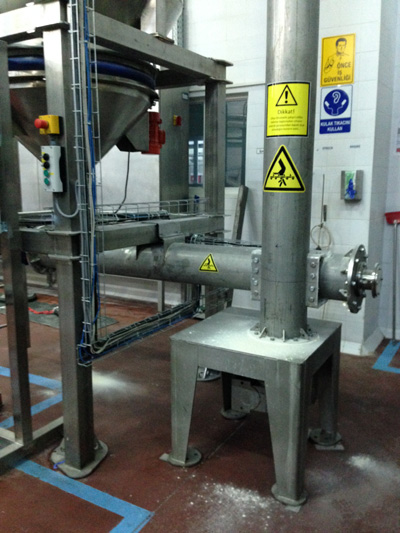
Interconnected Screw Conveyor Systems
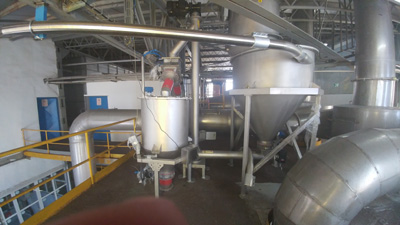
In some processes it is not possible to run a screw at an angle. In such cases, interconnected horizontal and vertical screws running at different speeds are used. Although they look like separate screws, they form two screw systems working in tandem. What needs attention here is the operating regime of the screws; otherwise they can damage each other. These screws are therefore controlled by a small automation system, sensors and defined operating conditions. The drives can be designed to sit at the bottom or at floor level.
 Screw Conveyor Catalogue