Screw Conveyor Types and How They Work
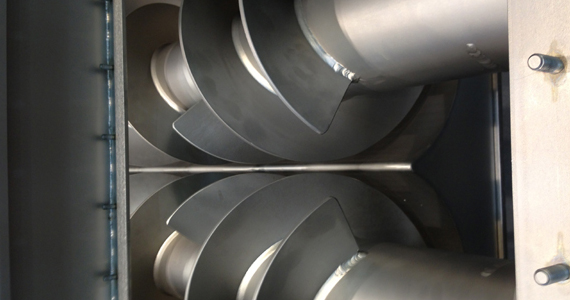
Screw conveyors (auger conveyors) are used mainly as conveyors in short-distance applications; they can also be used as mixers. Screw conveyors are designed taking into account diameter, pitch, capacity, inlet/outlet type, operating angle, operating pressure, bearing type, the type of material to be conveyed, particle size and friability. Where necessary, the flights are coated or lined with polyamide, cast nylon (Kestamid) or PTFE. Most of our products are made from cold-formed flights. Our manufacturing range includes: 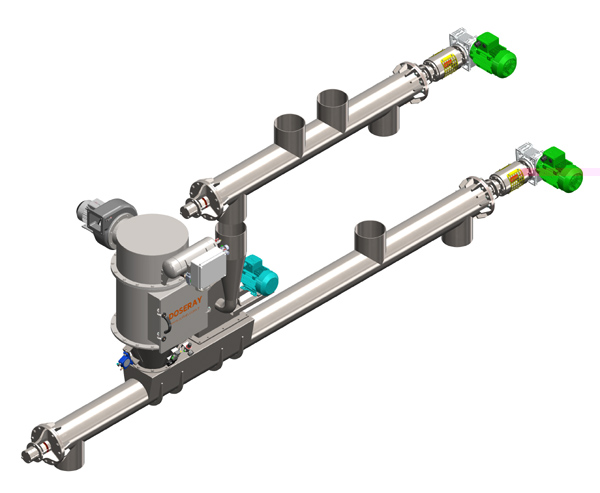
1. Tubular screw conveyor (auger conveyor)
2. U-trough screw conveyor (auger conveyor)
3. Conical screw conveyor (auger conveyor)
4. Flexible shaftless screw conveyor (auger conveyor)
Based on the information you provide, we manufacture all screw and auger conveyors in diameters from 33 to 425 mm.
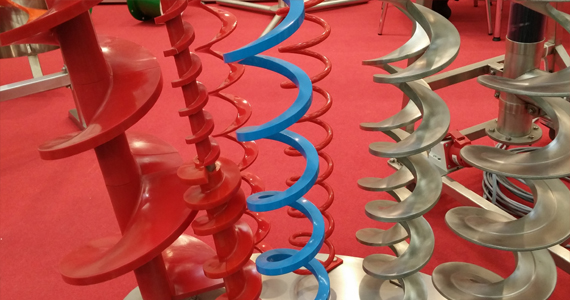
Screw conveyors (auger conveyors) vary according to the product to be conveyed. We manufacture different types of screw conveyors and screw flights depending on the properties of the material. Our screw conveyors vary by housing type and flight type.
Flexible Screw Conveyor Types and How They Work
Flexible screw conveyors are used mainly as conveyors in short-distance applications and are preferred for hopper discharge at free angles. In shaftless design they can reach lengths of up to 10 metres. They are highly efficient with powders, but may not achieve the same efficiency with granular materials or materials with different properties. They can turn 90 degrees with a bend radius of R=3000 mm. They perform well with non-degrading materials such as PVC powder, PP, PE, flour, sesame and cocoa. They play an effective role in big bag filling and discharging, sack filling and emptying, and hopper/silo feeding. They are used mainly at low capacities, with a maximum capacity of 3 m³/h.
What Is CEMA?
CEMA is perhaps the most important standard to consider when manufacturing a screw conveyor or auger. It brings together the standards that key elements such as bearings, inlets and screw type must meet.
Micro dosing and custom fabrication
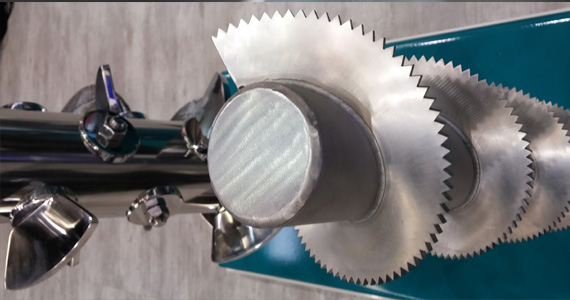
Screw flights are made by cold drawing; for large-diameter screws, laser cutting followed by drawing is used. Our production programme covers both complete assemblies and semi-finished parts (flight and shaft). Very small screws are also known as micro-dosing screws.
Standard Screw Conveyor
Types
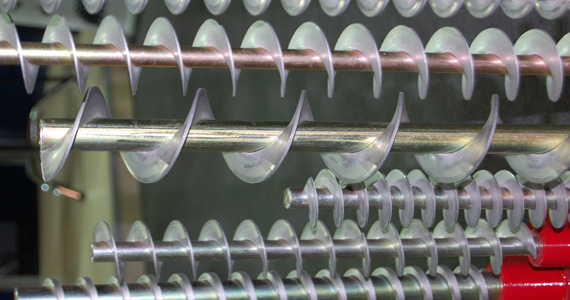
The screw conveyors we manufacture work as conveyors in short-distance applications. With double-flight or ribbon-flight designs, they can also be used as mixers. The stainless steel screw conveyors built in our workshop are designed to CEMA, taking into account flight diameter, pitch, capacity, inlet/outlet type, operating angle, operating pressure (if any), bearing type, the type of material to be conveyed, particle size and friability. Where necessary, the flights are coated or lined with polyamide, cast nylon (Kestamid) or PTFE. Most of our screws are made from cold-formed flights. Although these appear standard, they can also be manufactured with different flight geometries to suit the process. Our most commonly used screw conveyor types are:
- 1. O-tube stainless steel screw conveyor
2. U-trough stainless steel screw conveyor
3. Conical stainless steel screw conveyor
4. Flexible shaftless stainless steel screw conveyor Based on the information you provide, we manufacture all our screw conveyors and screws with flight diameters from 15 to 1,000 mm. -
 Screw Conveyor Catalogue