Silo Discharge Systems – Bin Activators
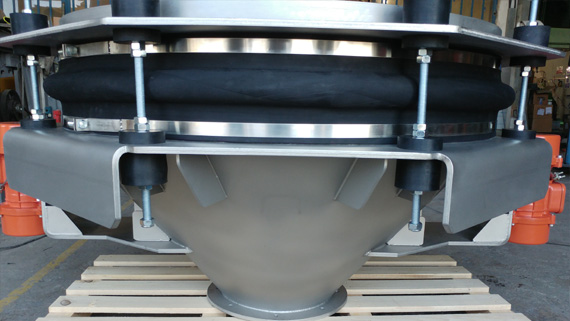
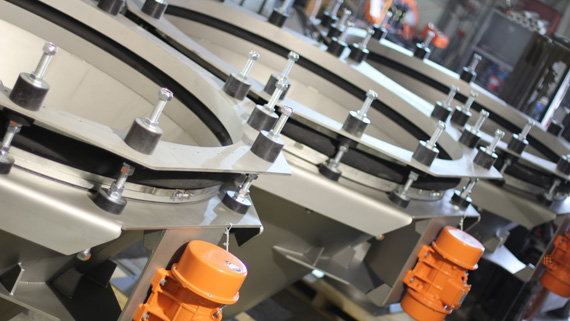
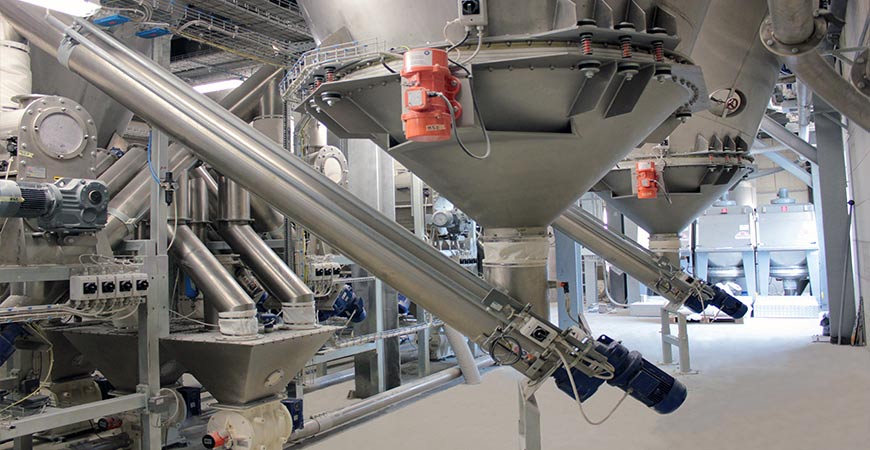
A vibrating discharge cone, also known as a bin activator, silo vibrator or rotoflow, is the general name for the vibrating cone used to discharge powders from silos and hoppers. The main problem with poorly flowing materials received in bulk is their flowability once in storage. This problem, which first appears as bridging, can cause serious discharge difficulties when combined with the physical and atmospheric conditions of the environment, moisture, density and the specific properties of the product.
Powdered or granular materials stored in indoor or outdoor silos can be discharged using different methods. The choice of silo discharge system depends on the type of downstream process or conveying (pneumatic or mechanical), the type of product stored (abrasiveness, density, characteristics, particle size, etc.) and the capacity. In the chemical, construction and food processes we install, the journey of powdered raw materials (granulated sugar, flour, cocoa, icing sugar, starch, cement, calcite, PP, etc.) begins with 60-degree cones and vibrating discharge cones (bin activators, silo activators, silo vibrators, rotoflow).
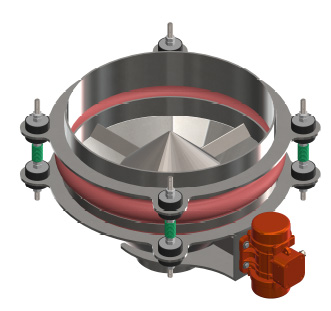
A bin activator uses vibration at different frequencies and forces to ensure that material flows steadily out of the discharge nozzle. Because bin activator cones transmit vibration to the entire internal volume of the silo, they also prevent segregation. Segregation is not only a flow problem; it also means that a material made up of different particle sizes behaves differently in different parts of the silo. Bin activator applications are one of the first and most fundamental ways of preventing the segregation of powdered and granular material in a silo.
If pneumatic conveying follows the bin activator, the material can feed either a pressure vessel or a rotary valve (airlock), depending on the selected conveying phase.

Silo fluidisation systems
Silo discharge with a bin activator ensures fast and effective emptying. Air blasters, aerators and air assistance also support the process.
Because bin activator cones transmit vibration to the entire internal volume of the silo, they also prevent segregation. Although bin activators may appear to be the complete answer, for raw materials that form lumps and obstruct flow a lump breaker can also be integrated into the system.
Bin Activator Cone Types
-
Even when the method is the same, tiny details at critical points can bring a process to a standstill. We sum this up as "every process has its own regime". For this reason, vibrating discharge cones (bin activators) differ according to the type of product to be stored. The decisive factors can be listed briefly as follows:
1. Flowability of the material (static behaviour)
2. Particle size or size distribution
3. Particle shape (interlocking; for example, long, flat
pasta-shaped raw materials flow with more difficulty
than irregular granules)
4. Capacity
5. Abrasiveness
6. Corrosiveness
Depending on the case, these factors determine the angle and type of the bin activator's inner cone and whether a ceramic or Teflon lining is required, or, depending on flowability, call for additional components such as UHMW-PE (Ulpolen) or cast polyamide (Kestamid) that are non-abrasive but improve flow. All these changes also apply to the deflector.
Bin activators and bridging
Problems that occasionally occur when discharging a silo or hopper, depending on the properties of the product, indicate that equipment is missing from the process. Bridging is foremost among them. Using a bin activator (vibrating discharge cone) is one of the most important solutions to bridging.
Solving segregation with a bin activator
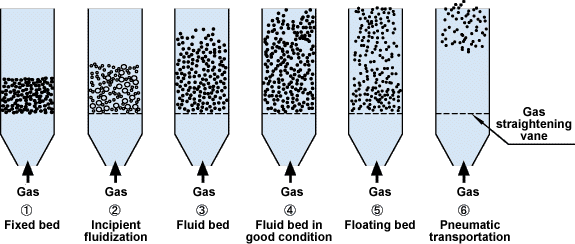
Another silo discharge method is to aerate the inside of the silo. Known as a fluidized bed, this method is an effective way of discharging and fluidising a silo.
Because bin activator cones transmit vibration to the entire internal volume of the silo, they also prevent segregation. Segregation is not only a flow problem; it also means that a material made up of different particle sizes behaves differently in different parts of the silo. Bin activator applications are one of the first and most fundamental ways of preventing the segregation of powdered and granular material in a silo.
 Bin Activator Catalogue