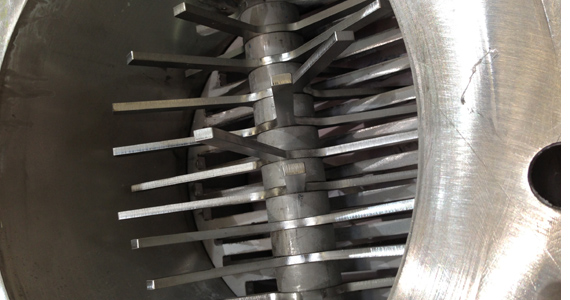

What Is a Lump Breaker? How Is It Used?
Lump crushers, also known as delumpers, are auxiliary devices used beneath silos and hoppers before bulk raw materials enter the process. Lump breakers ensure that raw materials enter the process at a standard size. Although they have many applications, they are mainly used to eliminate caking problems caused by the hygroscopic or other properties of the raw material before it enters pneumatic or mechanical conveying.
In addition, lumpy or caked bulk solids can cause bridging, jamming or blockages at various stages of the process. Examples include reactor feeds, conical feed outlets of equipment, process inlets and solution preparation within the process.
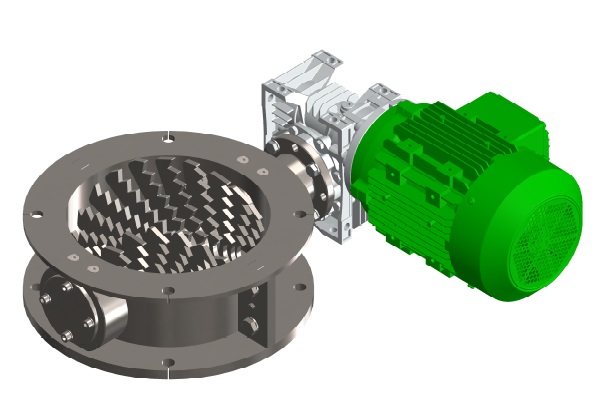
Stainless lump breakers and crushers
Generally chosen for chemical, pharmaceutical and food processes, corrosive environments and hygienic applications (sugar silos, sugar hoppers, etc.). They come in two types, square and round. In the pharmaceutical and food sectors, the round design is particularly preferred for hygiene and contamination reasons.
Crushers for industrial systems
Generally used in industrial processes. Their purpose, again, is to break up lumped material that could be broken apart by hand. They are used only to break up powder and granular bulk solids that have hardened or caked due to atmospheric conditions; they are not suitable for crushing rocks and stones from outside.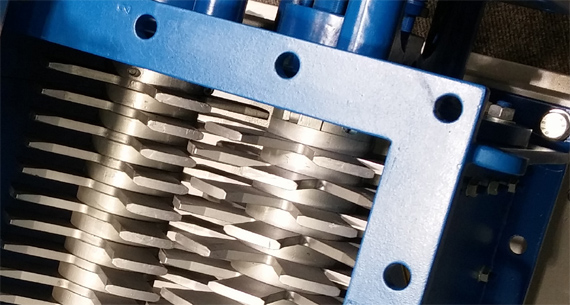
Raw materials at standard size
Production processes are generally based on standard recipes and sometimes do not tolerate deviations. If the product structure is also non-standard, this deviation becomes a problem. Lump breakers, also known as lump crushers, ensure that products enter the process at a standard size.
Bridging solutions
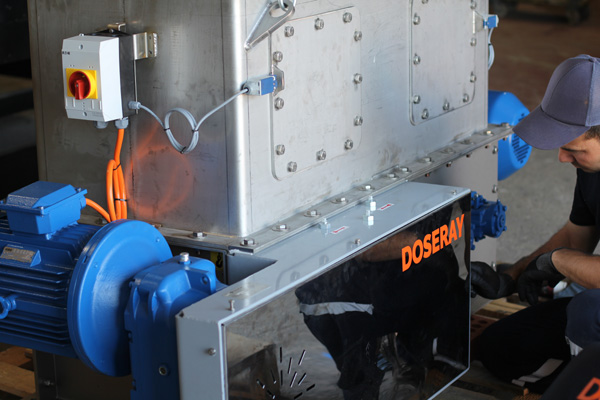
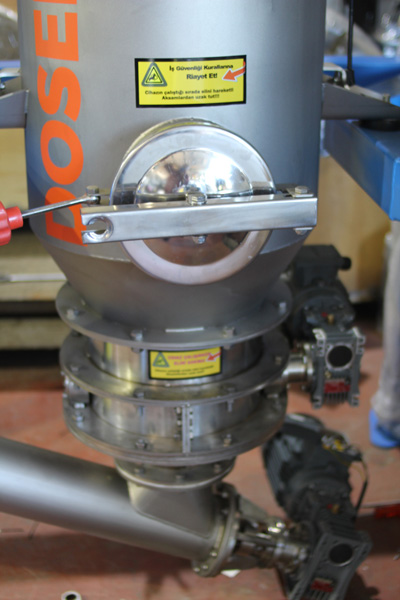
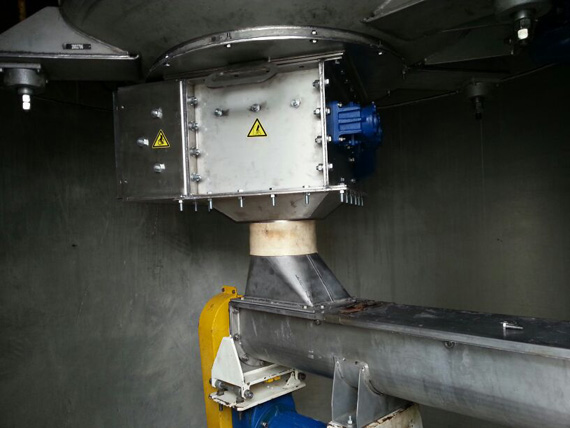
One of the problems encountered when discharging raw materials from storage systems is bridging. With micronised raw materials, bridging can be solved with various fluidising equipment; however, if bridging is caused by coarse lumps, lump breakers should be used. The image below shows an application upstream of a silo discharge screw conveyor feed. A tandem (twin) lump breaker arrangement is also possible for high-capacity processes, as shown in the image above.
 Lump Breaker Catalogue