Dilute, Medium and Continuous Phase Pneumatic Conveying Systems with Blowers
In dilute phase pneumatic conveying, the product is carried in suspension in high-velocity air. The blower that generates this air accounts for most of the system's energy consumption; if it is not selected correctly, the line either blocks or wastes energy.
Blower selection is based on two values: air flow (the volume of air that provides an air velocity sufficient to keep the product in suspension) and pressure (the sum of the pipe, elbow, product load and filter losses in the line). Positive displacement (roots) blowers are the most widely used type in pneumatic conveying because they keep the air flow largely constant even as the pressure changes.
The inlet filter, silencer, safety and check valves, pressure gauge and, if necessary, an air cooler are designed as a package together with the blower. The temperature of the conveying air determines whether a cooler is needed, especially for heat-sensitive products such as sugar and chocolate.

- Blower Conveying Systems (Vacuum Conveyor)
-
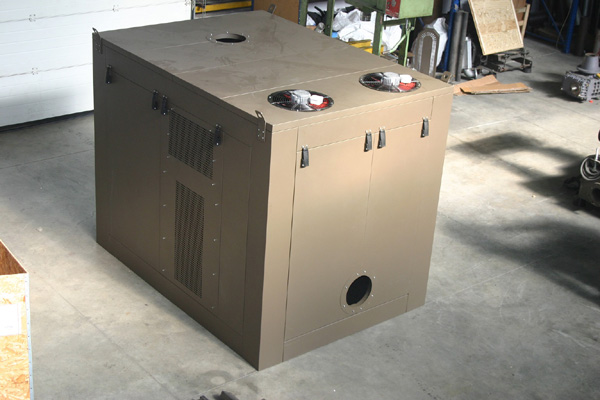
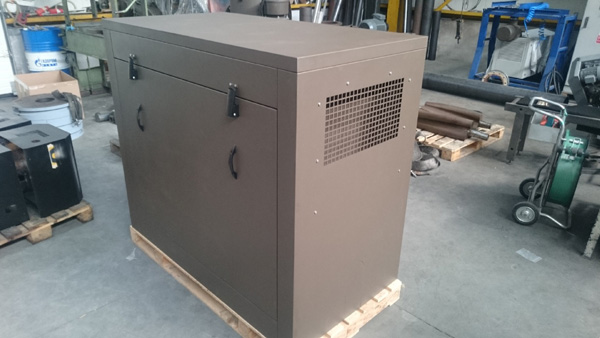
Sound-insulated acoustic enclosure (74-85 dB), forced cooling fan
Silencer, safety valve, glycerine-filled pressure gauge
Check valve protecting the blower against high pressure in pressure applications
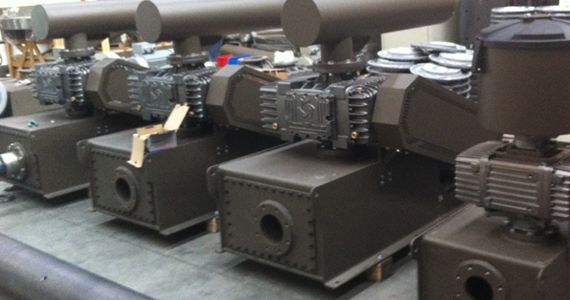
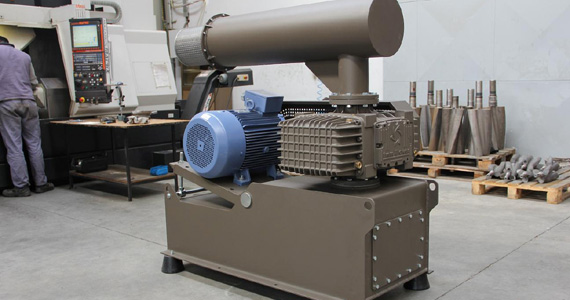
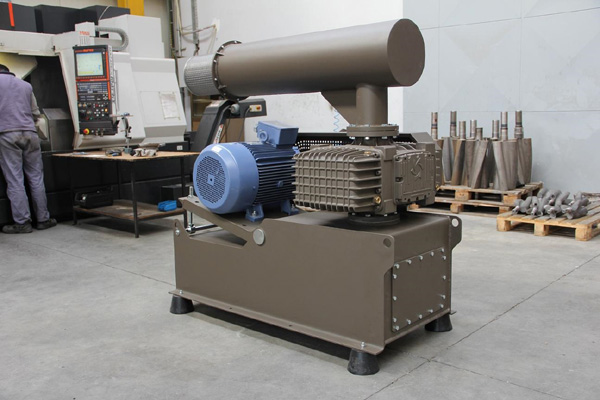
Roots-type Helis blower HLB Series, 11-90 kW
Theoretical conveying pressure and air flow tested with DN50-250 pipe:
Δp (100 mbar) Min: 700 m³/h (air flow depends on blower model)
Δp (1,000 mbar) Max: 15,000 m³/h (depends on blower model)
Pressure applications:
+1,000 mbar maximum continuous operating pressure
+1,250 mbar maximum peak pressure
Operating temperature: -20 to +50 °C
How Do Pneumatic Conveying Systems Work?
The air leaving the blower picks up the product at the feed point under the rotary valve, carries it along the pipeline and is separated from the product in the cyclone or filter receiver at the end of the line.
Our Pneumatic Conveying Experience
In line calculations we use pressure loss data obtained from our own field measurements, so we size blower capacity for real operating conditions.
Why DOSERAY Pneumatic Conveying?
We design and commission the blower, rotary valve, pipeline and filter as a single system.
What Is the Difference Between Pneumatic and Mechanical Conveying?
In mechanical conveying (screw conveyors, bucket elevators), energy is transferred directly to the product, whereas in pneumatic conveying energy is first transferred to the air and then to the product via the air. Pneumatic conveying can therefore be more costly in energy terms; however, the flexibility of routing and the advantage of a closed system often offset this.
READ MORE Pneumatic Conveying Catalogue