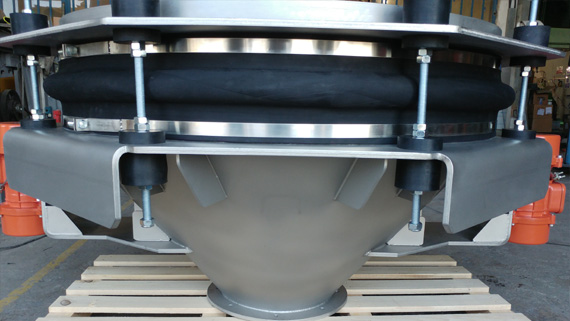
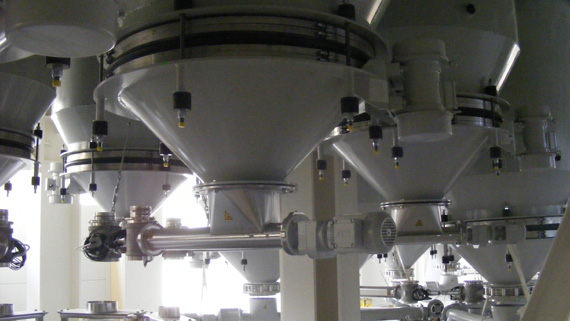
Silo Discharge Systems – Bin Activators
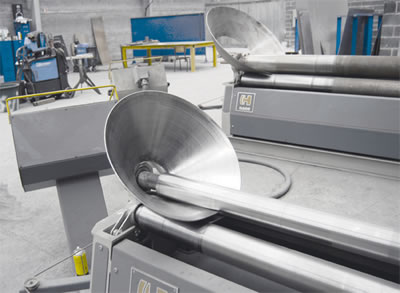
Vibrating discharge cone, bin activator, silo vibrator and rotoflow are different names for the vibrating cone that discharges powders from silos and hoppers. The main problem with powdered materials received in bulk is their flowability after storage. This problem, which first appears as bridging, can cause serious discharge difficulties when combined with the physical and atmospheric conditions of the environment, moisture, density and the product's own characteristics.
Powdered or granular materials stored in indoor or outdoor silos can be discharged by different methods. The choice of silo discharge system depends on the type of downstream process or conveying (pneumatic, mechanical), the type of stored product (abrasiveness, density, characteristics, particle size, etc.) and the capacity. In the chemical, construction and food processes we install, the journey of powdered raw materials (granulated sugar, flour, cocoa, icing sugar, starch, cement, calcite, PP, etc.) begins with 60-degree cones and vibrating discharge cones, also known as bin activators (bin activator, silo activator, vibrating discharge cone, silo vibrator, rotoflow).
A bin activator uses vibration of different frequencies and power to make the material flow from the outlet nozzle in a controlled manner. Because bin activator cones transmit vibration into the silo, they also prevent segregation. Segregation is not only a flow problem; it also means that material made up of different particle sizes separates inside the silo and shows different characteristics. Using a bin activator is one of the first and most fundamental ways of preventing segregation of powdered and granular material in a silo. If pneumatic conveying follows the bin activator, the material feeds the pressure vessel or rotary valve depending on the selected conveying phase.
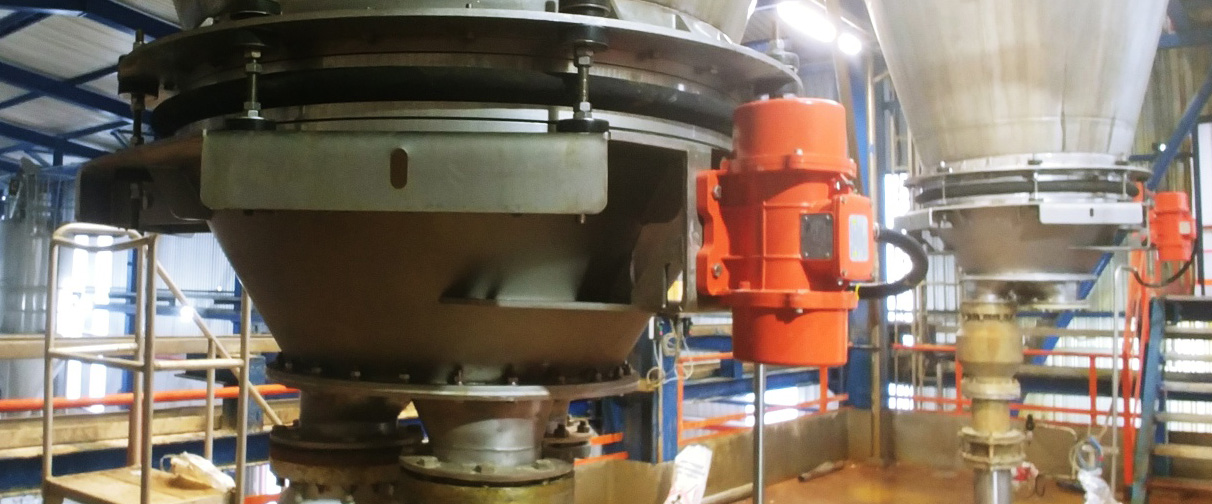
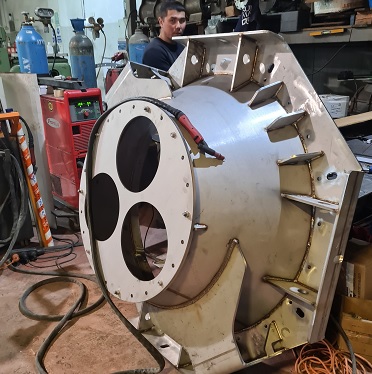
Bin activators vary according to their application and are manufactured under different certification processes. The bin activators we manufacture can optionally be produced to include production inspection methods such as WPS, PQR, UT and dye penetrant testing. Ex solutions are also part of our product range, depending on the process.

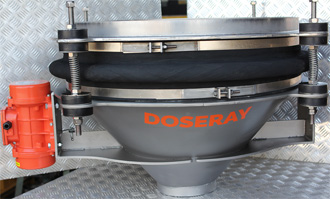
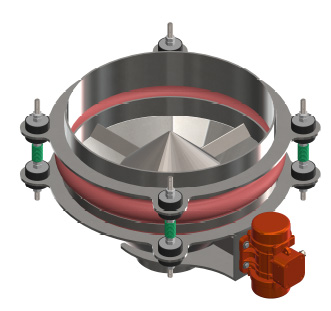
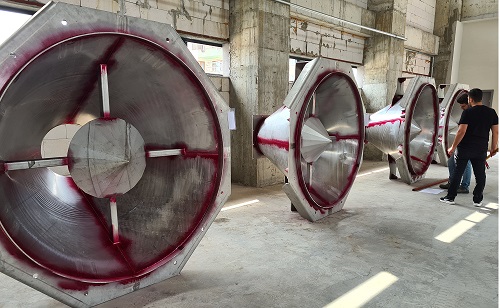
Rotoflow / Bin Activator Operating Principle
A bin activator (silo activator, vibrating discharge cone, silo vibrator, rotoflow) uses vibration to make the material flow down through the outlet nozzle, depending on the operating frequency of the vibrators that make up the bin activator.
Because bin activator cones transmit vibration into the silo, they also prevent segregation problems. Segregation is not only a flow problem; it also means that material made up of different particle sizes shows different characteristics inside the silo. Using a bin activator is one of the first and most fundamental ways of preventing segregation of powdered and granular material in a silo. Although bin activators may seem to solve this problem, for raw materials that form blocks and obstruct flow, a lump breaker can also be added to the system.
Such flow-aid systems may also need to be added to the process at a later stage. That is why square and round options, matched to the conical shape of the storage hopper or silo, are also part of our manufacturing programme.
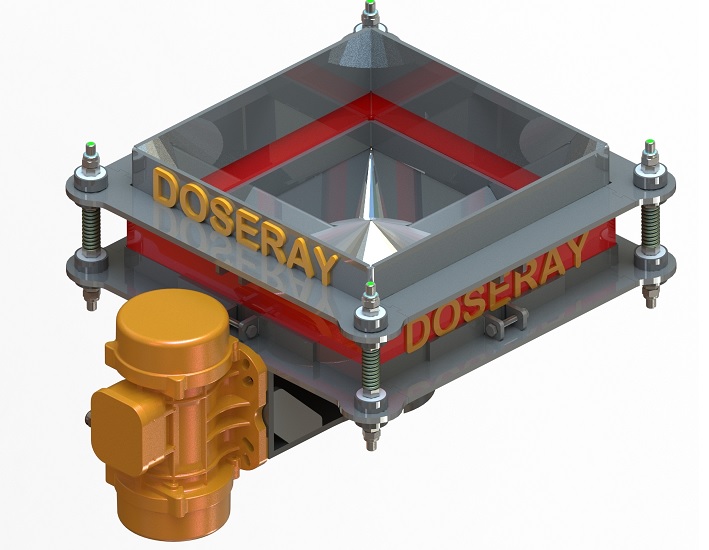
Bin Activator Cone Types
-
We know that every process is different. Even when the method is the same, very small details at critical points can bring a process to a standstill; in short, every process has its own operating regime. This equipment, known by different names such as vibrating discharge cone, bin activator or vibrating cone, varies according to the type of product to be stored. The decisive criteria can be listed as follows:
1. Flowability of the material (static behaviour)
2. Granule size or sizes
3. Granule shape (interlocking; for example, long, flat pasta-shaped raw materials flow with more difficulty than shapeless granules)
4. Capacity
5. Abrasiveness
6. Corrosiveness
These criteria determine the angle and type of the bin activator's inner cone and whether a ceramic or Teflon lining is required; depending on flowability, additional equipment such as Ulpolen or Kestamid, which is non-abrasive but eases flow, may also be needed. All of these modifications also apply to the deflector.
No More Bridging Problems
Difficulties encountered when discharging a silo or hopper, depending on the properties of the product, point to a missing piece of equipment in the process. Bridging is the most common of these problems. The vibrating discharge cone, known by names such as bin activator, rotoflow or silo vibrator, is the most effective solution to this problem.
Segregation Solutions
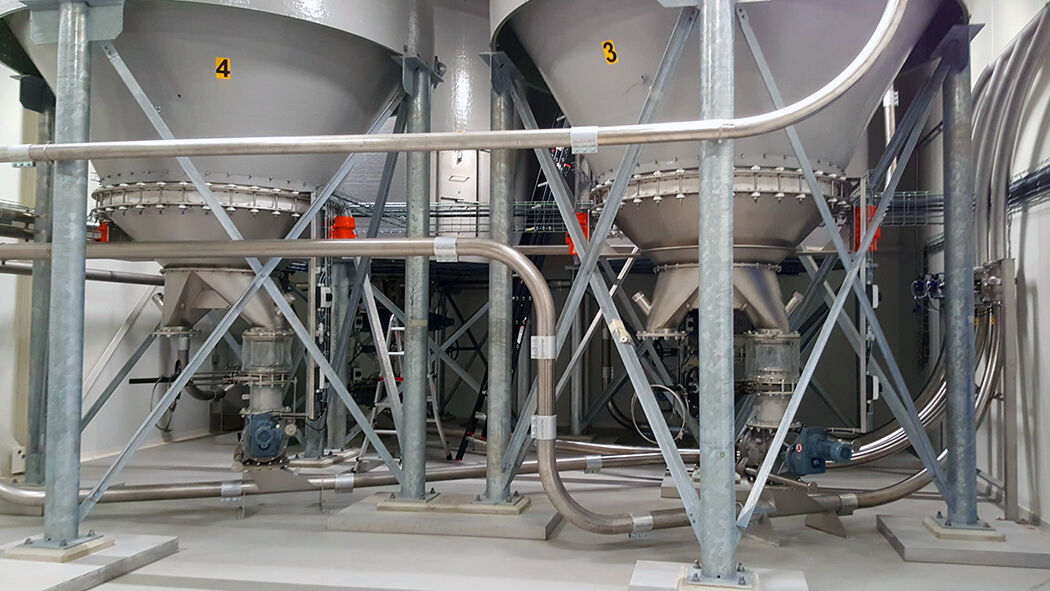
A bin activator (silo activator, vibrating discharge cone, silo vibrator, rotoflow) uses vibration to make the material flow down through the outlet nozzle, depending on the operating frequency of the vibrators that make up the bin activator.
Because bin activator cones transmit vibration into the silo, they also prevent segregation problems. Segregation is not only a flow problem; it also means that material made up of different particle sizes shows different characteristics inside the silo. Using a bin activator is one of the first and most fundamental ways of preventing segregation of powdered and granular material in a silo.
 Bin Activator Catalogue