How does a rotary magnet work?
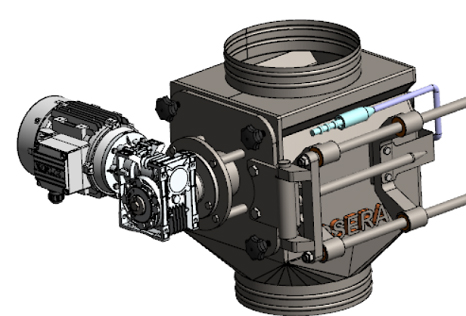
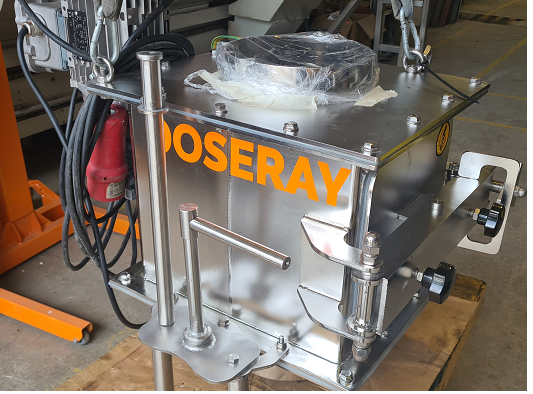
A rotary magnet is an in-line magnetic separator installed in vertical lines to remove ferrous and paramagnetic particles from dry bulk solids as they are transferred through the process. It is designed specifically for poorly flowing raw materials prone to bridging, such as milk powder or starch, and can also be used with all micronised powders.
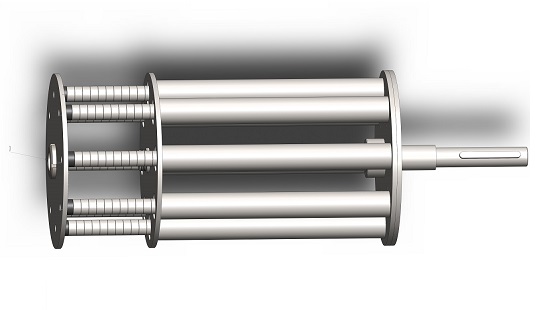
A centrally mounted grid rotates slowly to prevent the product from bridging or blocking, keeps it flowing freely and captures fine ferrous and semi-ferrous particles. It is ideal for particles as small as 30 microns.
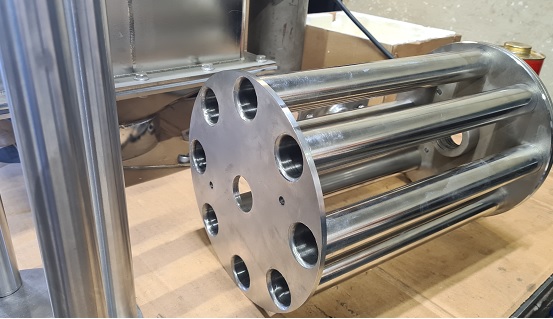
Cleaning is simple and quick. Once product flow has stopped, the access door is opened and the rotating grid is withdrawn from the housing. When the powerful rare-earth magnetic bars are slid out, the metal contaminants drop off the tubes by themselves and can be kept for analysis. Electrical safety switches disable the motor before access for cleaning is possible.
The magnetic assembly uses neodymium magnets with a holding force of 9,000 Gauss. The maximum operating temperature of the standard rotary magnetic separator must be below 80 °C, but it can be adapted for temperatures between 80 °C and 350 °C if required. The maximum magnetic field strength of the rotary magnet can reach 12,000 Gauss.
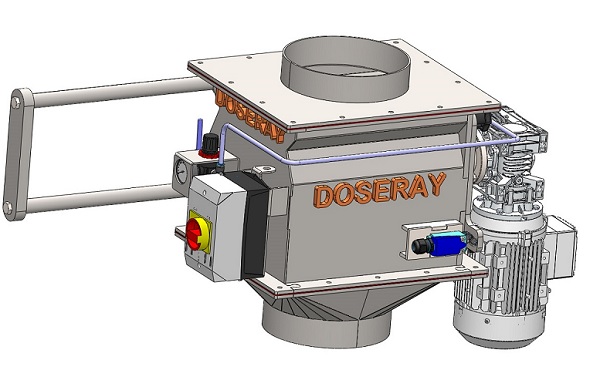
With different inlet and outlet flanges and reducers, the rotary magnetic separator whose dimensions are given below can be used in sizes up to DN100–DN300. Its design also allows it to operate in all vacuum and pressure lines.
•
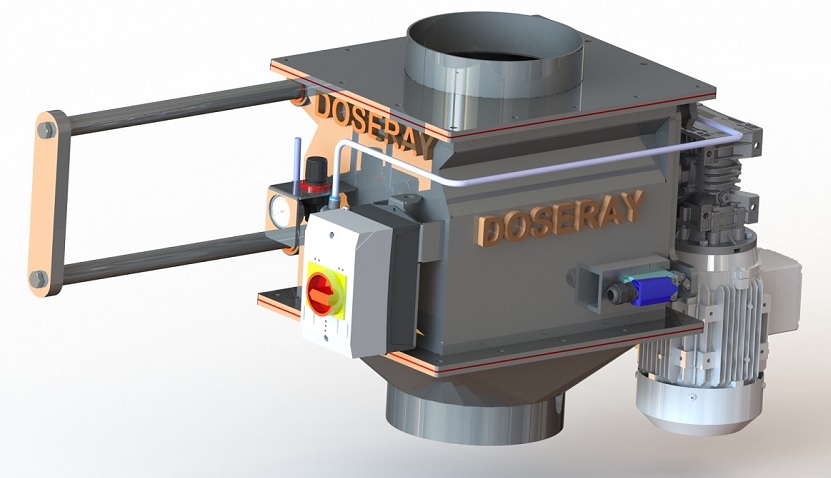
Further technical features and advantages of the magnetic separator
❶ Its design does not obstruct product flow.
❸ Options available for pressure and vacuum applications.
❹ Easy to clean; all parts can be dismantled easily when needed.
❺ Inlet and outlet dimensions comply with DN standards; spigots can be fitted if required.
❻ The bright-polished internal surface prevents microbial contamination.
Blockage-free, continuous flow: The continuously rotating magnetic bars stop the product from bridging and blocking the line, ensuring even flow.
• High hygiene standards: Fully stainless steel (AISI 304/316) housing, food-grade seals and smooth weld finish. Fully compliant with BRC, IFS and HACCP standards.
• Maximum protection: High-strength neodymium magnets rated at 10,000–12,000 Gauss capture even the smallest metal contaminants that could endanger consumer health.
• Easy, safe cleaning: The "easy-clean" design allows fast cleaning and sterilisation with minimal production downtime.
Take Control of
Your Process

How Is Screening Done During Blower Conveying?
In-line screens with easy cleaning, easy maintenance and automatic discharge, suitable for food and chemical processes as well as for operation under pressure and vacuum, are part of our custom production range, with capacities of 1 t/h - 10 t/h and a screening range of 500-1500 microns.
During pneumatic conveying (under vacuum or pressure), the product is screened at the final stage, just before it enters production. Only granules and powders of acceptable size enter your process, while unwanted particles are removed. This is especially important in food processing.
Flour arriving from the mill, for example, may contain flour mite larvae. If these larvae are not removed before production, the results can be very unpleasant. One of the key features of these in-line screens is their automatic cleaning function: in batch systems, the unit cleans itself automatically during line purging.
. 
 Rotary Magnet Catalogue