In-Line Pneumatic Centrifugal Sieve (Vacuum-Pressure)
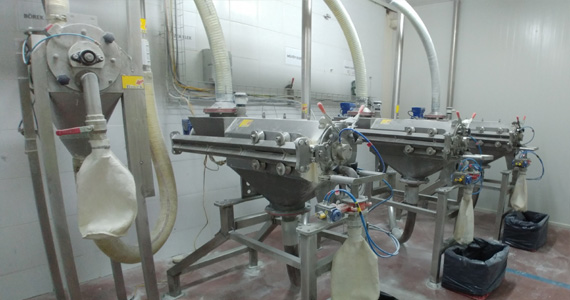
We screen the raw materials you will use during storage, or in the mechanical and pneumatic conveying processes after storage, in pneumatic sieves that work with magnets and centrifugal force, and send them to your process clean and ready for processing. The coarse sieve used when filling silos from bulk tankers and the sieve used during processing (shown alongside) are of different designs. Our sieves are widely used in food and chemical processes in particular. The capacity of a pneumatic in-line sieve is directly proportional to the mesh aperture. Our sieves, which can screen down to 550 microns, can be adapted to the required aperture depending on the process. In addition, thanks to their construction, they are not at risk of screen mesh bursting or tearing, which is the biggest problem with sieves of this kind.
Silo Check Sieve
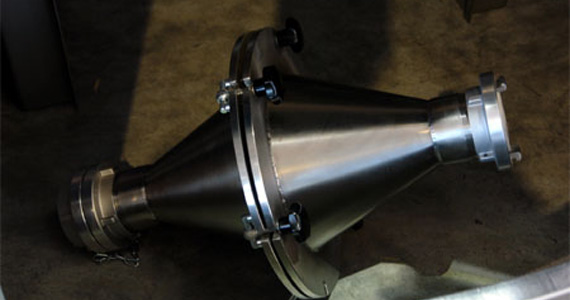
If the products entering the process are received in bulk, they can be coarsely screened at the process inlet without reducing capacity. The main purpose of these fixed but highly permeable sieves is to prevent very large pieces from entering the silo. They therefore have a coarser screening range than pneumatic in-line sieves.
How Do Centrifugal Sieves Work?
The material is fed pneumatically into the product inlet and directed by a feed screw into the cylindrical screening chamber. Helical paddles rotating within the enclosed chamber continuously drive the material towards the screen, while the centrifugal force acting on the particles rapidly propels the material to be screened through the apertures. These rotating paddles, which never come into contact with the screen, also break up soft agglomerates. Oversize particles and foreign matter are ejected through the discharge valve.

Your Process Under Control
Custom Sieve Manufacturing (Vacuum-Pressure)
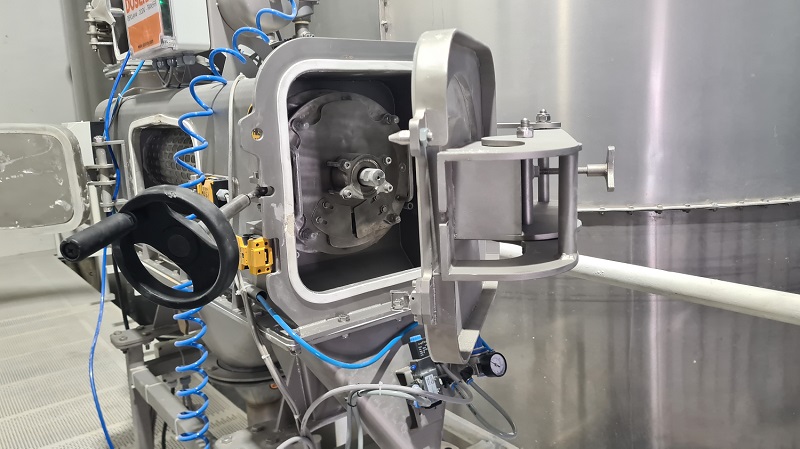
Our production programme includes custom-built sieves that are easy to clean and maintain, self-emptying, suitable for food and chemical processes, able to operate under pressure and vacuum, with capacities of 1-10 t/h and a screening range of 500-1500 microns.
During pneumatic conveying (vacuum or pressure), the product is screened at the final stage before it enters production. This screening ensures that only granular or powdered bulk solids of acceptable size enter your process, while other particles that do not meet the specification are separated out. This is especially important in food processes.
Flour arriving from the mill, for example, may contain flour moth larvae. If these larvae are not separated out before production, they can lead to very unpleasant results in manufacturing. One of the key features of these in-line sieves is automatic cleaning: in batch systems, the sieve cleans itself automatically during line purging.
 Screening (Sieve) Catalogue