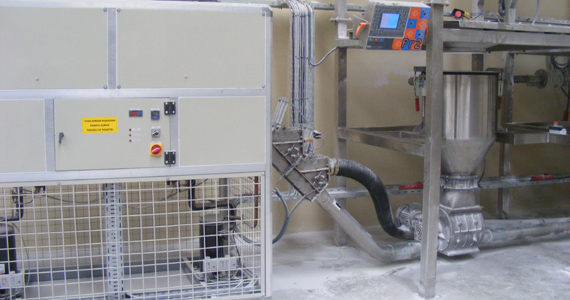
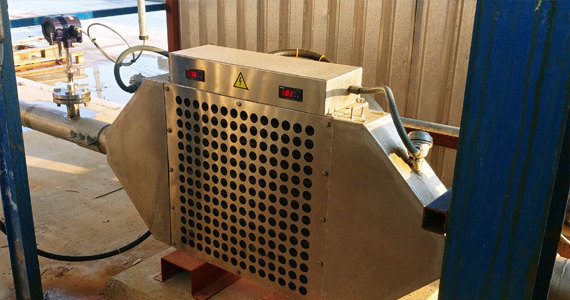
Cooling and Conditioning in Pneumatic Conveying Processes
In industrial blower systems (especially Roots blowers), compressing the air (adiabatic compression) can drive its temperature very high. This leads to deformation of pipelines, degradation of product quality in pneumatic conveying and shorter equipment life.
Designed with advanced engineering, our Blower Air Coolers bring high-temperature air at the blower outlet down to safe operating temperatures, maximising the efficiency of your plant.
Technical Features of the Blower Air Cooler
-
Superior Heat Transfer Efficiency: Specially designed finned tube geometries provide maximum surface area for fast, effective heat transfer.
-
Low Pressure Drop: The optimised internal flow design keeps air flow resistance to a minimum and prevents unnecessary blower energy consumption.
-
Durable Materials: Tube and housing options in aluminium, galvanised steel, copper or stainless steel (AISI 304/316) to withstand harsh operating conditions.
-
Compact, Modular Design: Flexible installation that integrates easily into existing plant infrastructure and tight spaces.
-
Long Service Life and Reliability: Corrosion-resistant outer coating and robust construction that has passed high-pressure testing.
These are devices that change the temperature and humidity of the atmospheric air used in processes. During pneumatic conveying, the air leaving the blower can reach 55–110 °C due to compression (under pressure), and this heated air can alter the properties of the raw material being conveyed. Specific dehumidification and cooling processes are also used when conveying hygroscopic materials that are affected even by ambient relative humidity. Particularly before pneumatically conveying bulk solids such as sugar, icing sugar and flour, the conveying air must be brought down to at least ambient conditions.
This calls for sophisticated equipment to cool and dehumidify the air. For such processes, we offer the following solutions:
1- Silica-gel-based mechanical cooling and dehumidification, dew point -40
2- Refrigerant cooling, dehumidification and cooling down to a dew point of +2 / +4
3- Atmospheric cooling (cooling to ambient +10 °C)
4- Water-cooled or coolant-cooled units.
Used mainly in dilute and medium phase conveying, these units can vary according to the operating pressure and air requirement of the process.
Likewise, in air-drying processes using high heat and vacuum, feeding the vacuum directly into the blower suction can damage the blower. The air may therefore need cooling in vacuum processes operating at high temperatures. In such processes, one of the cooling methods listed above may also be required.
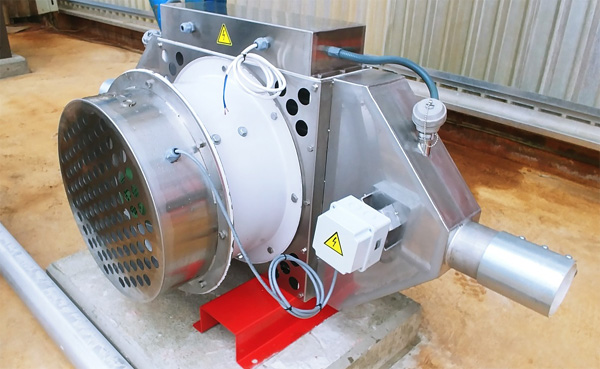

Cool Your Blower Conveying Air
In the region where industrial plants are located, including Türkiye, 1 m³ of air contains around 5 g of moisture in winter and around 12 g in summer. Depending on the type of evaporator used, this moisture changes phase into water during cooling. All cooling processes therefore also need additional systems to remove this moisture. If the separated moisture is not drained, it can mix back into the air as soon as it is released and be carried along with the conveying air. This is not generally recommended, except in non-Ex processes.
While moisture in the air makes a positive contribution to the process in terms of Ex safety because of the enthalpy of water, it can cause problems, particularly for hygroscopic and specially dried bulk solids. Equipment should therefore be selected with this in mind.
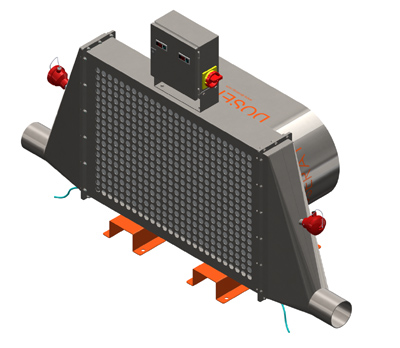
Which Cooling Method Should I Use for Blower Air?
In pneumatic conveying systems, the most common approach is to install a compressed air cooler after the blower. The process also varies with the temperature and humidity values you need. The method that reaches the lowest temperatures, but at the highest cost, is silica-gel-based mechanical cooling, which can cool down to -40 °C. Refrigerant cooling ranks second in cost and can cool down to +2 °C. Water cooling is another high-performance method, but it requires a chilled water (coolant) supply at your plant.
.
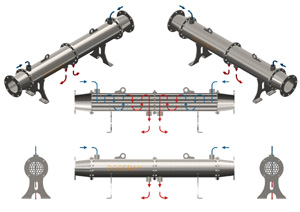
Blower Air Cooling with Coolant (Water, Glycol), Refrigerant and Air

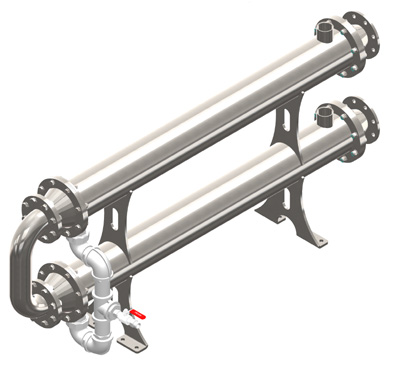
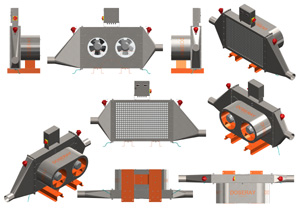
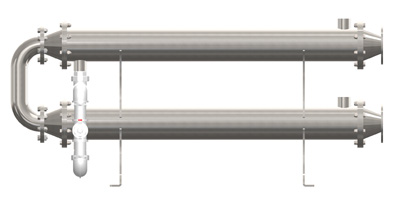
It is well known that compressed air releases heat in pneumatic conveying systems. In processes where mechanical and refrigerant cooling are too expensive and atmospheric cooling is insufficient, water-to-air cooling can be used. Using the chilled water available at your plant, you can cool your pneumatic conveying air to within 2–10 °C of the temperature of the cooling source (ambient air or water-glycol coolant), depending on the cooling method used. This value depends on the type and size of the heat exchanger.
READ MORE
 Blower Air Cooler Catalogue