Wear-Resistant Elbows for Pneumatic Conveying
Engineering Polymer Elbows
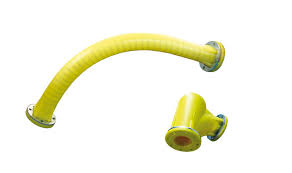
These elbows are much easier to install than basalt, ceramic and similar elbows. They stand out for their light weight and ease of use. Because of workplace safety and ease of maintenance, they are widely preferred, particularly for pipelines at great heights. They are produced in one piece from SINT engineering polymer with a helical spring core.
Other Features:
Large material impact zone
SINT versions for plastic pellets, granules, sand and fine, abrasive or chemically very aggressive powders
Compatible with PN-type connection flanges
Higher wear resistance than conventional carbon steel or stainless steel elbows
Flexible and lightweight
Low noise level
Suitable for vacuum and positive-pressure, low-density dilute phase pneumatic conveying
No risk of mechanical degradation or biochemical decomposition of the material
Cast SINT engineering polymer body design
Where Are Wear-Resistant Elbows Used?
Mining; coal, cement, calcite, dolomite, soda, sand, metal powder, kaolin, feldspar, gypsum, lime, etc.

Wear-Resistant Basalt Elbows
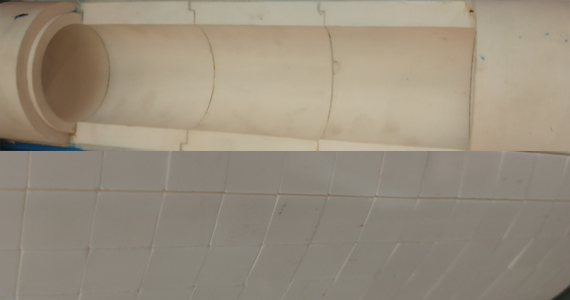
Basalt, a rock of volcanic origin containing iron, sulphate, magnesium and olivine in its chemical composition, has a dense, hard and durable structure. It does not shatter when broken and retains its homogeneous structure. Basalt is the most common natural rock of volcanic origin, found as interlayer masses or lava flows after volcanic eruptions.
Its mineral structure is porphyritic, glassy or cryptocrystalline aphyric. Porphyritic rocks are distinguished by small amounts of black pyroxene prisms as well as yellowish-green isometric olivine crystals.
The density of the stone is 2530–2970 kg/m³; water absorption ranges from 0.25% to 10.2%. Poisson's ratio is 0.20–0.25. The specific heat capacity at 0 °C is 0.85 J/kg K. The melting point is in the range of 1300–1400 °C, reaching 1450 °C in some cases. Its strength is in the range of 60–400 MPa.
This stone, found freely in nature, is melted with an enriched chemical composition and cast into the shape of an elbow, thereby gaining high strength.
Manufacture of Replaceable, Wear-Resistant Elbows

Heavy-Duty Ceramic Pipes and Elbows
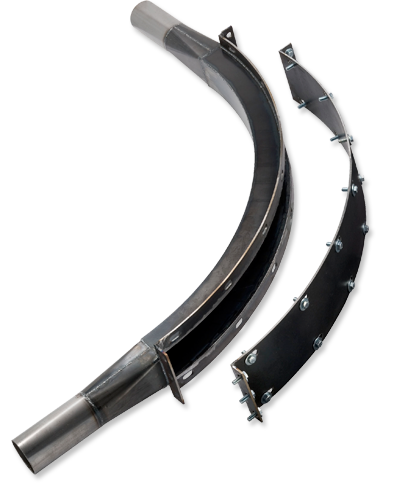
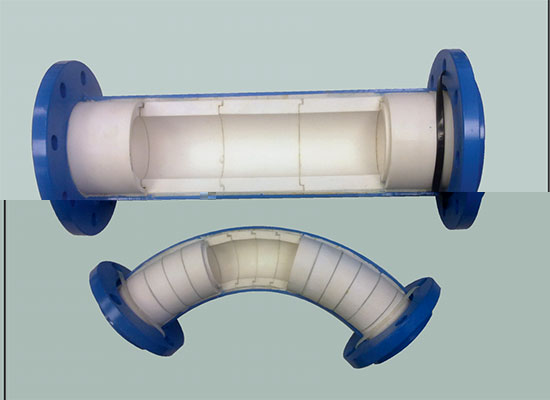
This pipe elbow is generally recommended for applications operating under severe conditions. It is formed by joining nested ceramic rings. The flanges are manufactured to DIN standards. It is used as an alternative to basalt elbows and has high mechanical strength.
The wide range of applications of ceramics stems from their superior mechanical properties.
High hardness and wear resistance, modulus of elasticity, and compressive and extrusion strength allow ceramic parts to be used where high mechanical stresses are expected. Ceramic-lined elbows and pipes are widely used in many areas, such as pneumatic and hydropneumatic conveying.
Stainless Steel Elbows

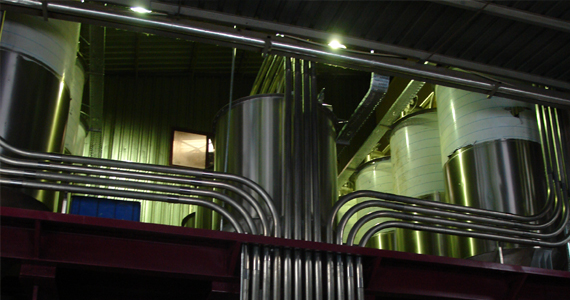
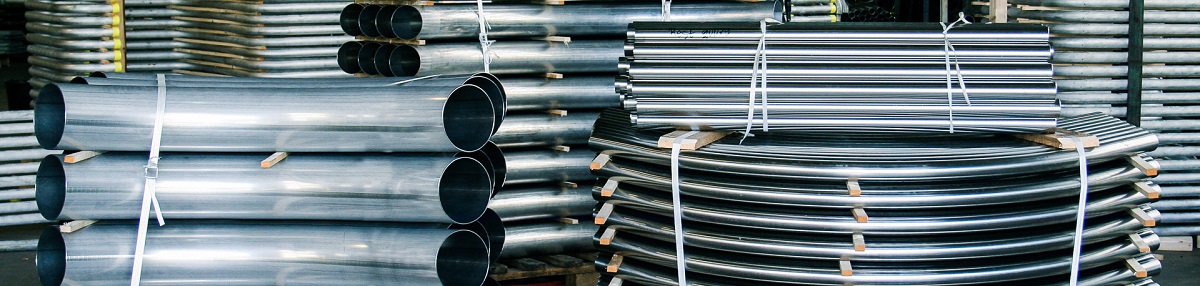
In pneumatic conveying systems, the air-product mixture moves at 2–22 m/s depending on the type of conveying. Long-radius elbows are used to avoid increasing the line pressure and interrupting the flow during conveying. In addition, thanks to standard long-radius elbows, no further modifications to the line are needed when they are replaced due to wear or any other reason.

 Pipe Connection Fittings (EURAC) Catalogue